Steering Control of Ackermann Architecture Weed Managing Mobile Robot
DOI:
https://doi.org/10.33411/IJIST/1230Keywords:
Ackermann Steering, Weed Detection, Mobile Robots, Path Planning, Stereo Vision, Image ProcessingAbstract
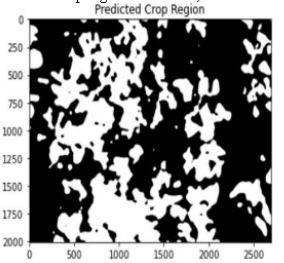
A robot designed to identify and remove weeds from crops is known as a weed control robot. Weeds compete with primary crops for moisture, hinder their growth, and may harm both human and animal health, leading to reduced crop yields. Traditionally, herbicides and other chemicals have been used to eliminate weeds, but these methods can damage crops and pollute the environment.In this work, we propose a new semantic weed detection method based on the PC/BC-DIM network, which demonstrates superior performance and classification accuracy compared to existing approaches. We developed an autonomous weed control robot incorporating Ackermann Architecture and a delta robot. The delta robot is equipped with a camera at its base to detect weeds in real-time.First, the robot captures images using the camera, and through image processing techniques, it differentiates weeds from crops. Detected weeds are then eliminated using an electrical discharge method, where electrodes attached to the robot’s end effector burn the targeted weeds.Additionally, we developed a path-planning and obstacle-avoidance system to help the mobile robot navigate the field. This system uses stereo vision to capture stereo images of the environment and calculate their disparity. By extracting depth information,the robot can detect obstacles, avoid them, and follow the shortest path using the A* algorithm.The results from this work are simulation-based, demonstrating effective weed detection in field images and efficient robot navigation using stereo images. The system achieved an overall accuracy of 81.25%. Although the system performs moderately well, the relatively high False Positive Rate and Root Mean Square (RMS) Error indicate the need for further improvements to reduce errors and false positives.Future work will focus on enhancing weed removal and implementing the simulated results on hardware.
References
B. Astrand et al.,” An Agricultural Mobile Robot with Vision-Based Perception for Mechanical Weed Control,” Autonomous Robots, vol. 13, no. 1, pp. 21-35, 2002.
A. Kumar et al.,” Design and Fabrication of Electric Weeder along with Fertilizer Sprayer,” Int. Res. J. Eng. Technol. (IRJET), vol. 10, no. 04, Apr. 2023.
M. F. Diprose et al.,” Electrical Methods of Killing Plants,” J. Agric. Engng Res., vol.30, no.3, pp.197-209,1984.
C.J. Lin et al., “Navigation Control of Ackermann Steering Robot Using Fuzzy Logic Controller,” Sensors Mater., vol. 35, no. 3, pp. 781-794, 2023.
X. Wu et al., “Robotic weed control using automated weed and crop classification,” Journal of Field Robotics, vol. 37, no. 2, pp. 322–340, Feb. 2020, doi: 10.1002/rob.21938.
R. Aravind et al., “Design and development of automatic weed detection and smart herbicide sprayer robot,” 2015 IEEE Recent Advances in Intelligent Computational Systems (RAICS), Dec. 2015, Published, doi: 10.1109/raics.2015.7488424.
P. Hoai et al., “Design a low-cost delta robot arm for pick and place applications based on computer vision,” FME Transactions, vol. 51, no. 1, pp. 99–108, 2023, doi: 10.5937/fme2301099p.
B. Astrand et al.,” An Agricultural Mobile Robot with Vision-Based Perception for Mechanical Weed Control,” Autonomous Robots, vol. 13, no. 1, pp. 21-35, 2002.
V. A. Kulkarni and A. G. Deshmukh,” Advanced Agriculture Robotic Weed Control System”, International Journal of Advanced Research in Electrical, Electronics and Instrumentation Engineering, vol. 2, no. 10, Oct. 2013.
A. Naveed et al., "Saliency-Based Semantic Weeds Detection and Classification Using UAV Multispectral Imaging," in IEEE Access, vol. 11, pp. 11991-12003, 2023, doi: 10.1109/ACCESS.2023.3242604.
R. Raja et al.,” Crop Signaling: A Novel Crop Recognition Technique for Robotic Weed Control.”, A novel weed and crop recognition technique for robotic weed control in a lettuce field with high weed densities, 2019.
Downloads
Published
How to Cite
Issue
Section
License
Copyright (c) 2025 50sea

This work is licensed under a Creative Commons Attribution 4.0 International License.