Multimodal AI Framework for Early Detection of Dyslexia in Children
DOI:
https://doi.org/10.33411/IJIST/1711Keywords:
Dyslexia, Early Detection, Handwriting Analysis, Cognitive Assessment, Multimodal System, Machine Learning, Educational ScreeningAbstract
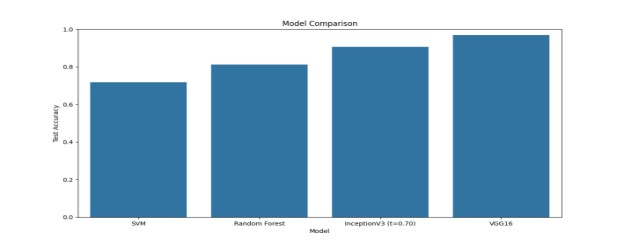
Dyslexia is a lifelong learning disorder. It is associated with how the brain functions, making it difficult for children to read, write, and retain information. If it is not identified when a child is young, then it can make it very challenging for the child to perform well at school. It can also negatively affect the child’s self-esteem. Therefore, it is very important to identify the problem during early childhood. This is even more critical in a country such as Pakistan, where awareness of dyslexia is limited and early screening facilities for children are not widely available. Usually, Traditional methods used to determine whether children have dyslexia, the process is slow, may produce inaccurate conclusions, and often examines only a single aspect of the disorder. To address these limitations, this document proposes an approach in which multiple features are integrated into a computer-based system to identify dyslexia. The program analyzes handwriting patterns and cognitive processing characteristics. When evaluated using data from data 200 children, the program achieved 96.9% accuracy and 91.7% sensitivity in determining whether a child has dyslexia. It successfully identified all cases, including the small number of children diagnosed with dyslexia, while only five children without dyslexia were incorrectly classified. Although this study has certain limitations, including a relatively small dataset and related constraints, the findings indicate that this multimodal behavioral and perceptual analysis approach improves the identification of children with dyslexia. The proposed approach offers a practical solution for early screening in educational settings, with potential for further improvement through additional data modalities.
References
B. J. Sahana Rangasrinivasan, M. S. Sumi Suresh, Abbie Olszewski, Srirangaraj Setlur, “AI-Enhanced Child Handwriting Analysis: A Framework for the Early Screening of Dyslexia and Dysgraphia,” SN Comput. Sci., vol. 6, no. 399, 2025, [Online]. Available: https://link.springer.com/article/10.1007/s42979-025-03927-0
G. C. Andrea Zingoni, Juri Taborri, “A machine learning-based classification model to support university students with dyslexia with personalized tools and strategies,” Sci. Rep., vol. 14, 2024, [Online]. Available: https://www.nature.com/articles/s41598-023-50879-7
M. Wang, B. A. Muthu, and C. B. Sivaparthipan, “Smart assistance to dyslexia students using artificial intelligence based augmentative alternative communication,” Int. J. Speech Technol. 2021 252, vol. 25, no. 2, pp. 343–353, Nov. 2021, doi: 10.1007/s10772-021-09921-0.
B. A. Norah Dhafer Alqahtani, “Detection of Dyslexia Through Images of Handwriting using Hybrid AI Approach,” Int. J. Adv. Comput. Sci. Appl., vol. 14, no. 10, 2023, [Online]. Available: https://thesai.org/Publications/ViewPaper?Volume=14&Issue=10&Code=IJACSA&SerialNo=99
“Machine Learning and Dyslexia: Diagnostic and Classification System (DCS) for Kids with Learning Disabilities.” Accessed: Feb. 11, 2026. [Online]. Available: https://www.researchgate.net/publication/329809412_Machine_Learning_and_Dyslexia_Diagnostic_and_Classification_System_DCS_for_Kids_with_Learning_Disabilities
Yazeed Alkhurayyif, Abdul Rahaman Wahab Sait, “A Review of Artificial Intelligence-Based Dyslexia Detection Techniques,” Diagnostics, vol. 14, no. 21, p. 2362, 2024, [Online]. Available: https://www.mdpi.com/2075-4418/14/21/2362
Yazeed Alkhurayyif, Abdul Rahaman Wahab Sait, “Deep learning-driven dyslexia detection model using multi-modality data,” PeerJ Comput. Sci., 2024, [Online]. Available: https://peerj.com/articles/cs-2077/
Hey Wing Liu, Shuo Wang, “DysDiTect: Dyslexia Identification Using CNN-Positional-LSTM-Attention Modeling with Chinese Dictation Task,” Brain Sci., vol. 14, no. 5, p. 444, 2024, [Online]. Available: https://www.mdpi.com/2076-3425/14/5/444
Andrea Zingoni, Juri Taborri, “Investigating Issues and Needs of Dyslexic Students at University: Proof of Concept of an Artificial Intelligence and Virtual Reality-Based Supporting Platform and Preliminary Results,” App Sci., vol. 11, no. 10, p. 4624, 2021, [Online]. Available: https://www.mdpi.com/2076-3417/11/10/4624
Z. K. Alae Eddine El Hmimdi, “Distinguishing Dyslexia, Attention Deficit, and Learning Disorders: Insights from AI and Eye Movements,” Bioengineering, 2025, [Online]. Available: https://www.semanticscholar.org/paper/Distinguishing-Dyslexia%2C-Attention-Deficit%2C-and-AI-Hmimdi-Kapoula/56b910d7c6a1faf7f2840081bb0165429c64abec
T. A. J. R. Yap, “Artificial Intelligence in Dyslexia Research and Education: A Scoping Review,” IEEE Access, vol. 13, pp. 7123–7134, 2025, [Online]. Available: https://ieeexplore.ieee.org/document/10829569
Norah Dhafer Alqahtani, Bander Alzahrani, “Deep Learning Applications for Dyslexia Prediction,” Appl. Sci, vol. 13, no. 5, p. 2804, 2023, [Online]. Available: https://www.mdpi.com/2076-3417/13/5/2804
O. L. Usman, R. C. Muniyandi, K. Omar, “Advance Machine Learning Methods for Dyslexia Biomarker Detection: A Review of Implementation Details and Challenges,” IEEE Access, vol. 9, 2021, [Online]. Available: https://ieeexplore.ieee.org/document/9364974
M. A. B. TUĞBERK TAŞ, “A machine learning approach for dyslexia detection using Turkish audio records,” Turkish J. Electr. Eng. Comput. Sci., vol. 31, no. 5, 2023, [Online]. Available: https://journals.tubitak.gov.tr/elektrik/vol31/iss5/10/
J. Radford, G. Richard, H. Richard, and M. Serrurier, “Detecting dyslexia from audio records: An ai approach,” Heal. 2021 - 14th Int. Conf. Heal. Informatics; Part 14th Int. Jt. Conf. Biomed. Eng. Syst. Technol. BIOSTEC 2021, pp. 58–66, 2021, doi: 10.5220/0010196000580066.
Fatma Sbiaa, Sonia Kotel, Rania Mghirbi, Ahmed Ghazi Blaeich, “Revolutionizing Dyslexia Diagnosis: An Intelligent Model Featuring Machine Learning and Fuzzyfication,” Procedia Comput. Sci., vol. 246, pp. 3624–3633, 2024, [Online]. Available: https://www.sciencedirect.com/science/article/pii/S1877050924022105
Giulia Lazzaro, Cristiana Varuzza, “Memory Deficits in Children with Developmental Dyslexia: A Reading-Level and Chronological-Age Matched Design,” Brain Sci., 2021, [Online]. Available: https://pubmed.ncbi.nlm.nih.gov/33401459/
Vasileios Alevizos, Sabrina Edralin, Akebu Simasiku, Dimitra Malliarou, “Handwriting Anomalies and Learning Disabilities through Recurrent Neural Networks and Geometric Pattern Analysis,” arXiv:2405.07238, 2024, [Online]. Available: https://arxiv.org/abs/2405.07238
Downloads
Published
How to Cite
Issue
Section
License
Copyright (c) 2025 50sea

This work is licensed under a Creative Commons Attribution 4.0 International License.