Benchmarking Hybrid Transfer Learning Architectures (VGG16, ResNet-50, InceptionV3) for Cauliflower Disease Classification
DOI:
https://doi.org/10.33411/IJIST/1759Keywords:
Benchmarking, Cauliflower Disease, Hybrid Model, InceptionV3, Precision Agriculture, ResNet50, VGG16Abstract
Plant diseases pose a direct threat to farmers' income and the country's economy. Timely and accurate identification of plant diseases can minimize these losses and associated damages for farmers. Cauliflower is a highly versatile, nutrient-dense cruciferous vegetable consumed daily worldwide. It is rich in fiber and vitamin C and aids digestion. It is cultivated in winter worldwide, particularly in the USA, China, India, Bangladesh, and Pakistan. These plants are highly vulnerable to leaf diseases such as bacterial spot rot, downy mildew, and black rot, which can adversely reduce their yields and have a significant impact on agricultural productivity and food security. manual plant monitoring is difficult, as it is labor-intensive and time-consuming. Automatic plant disease recognition using deep learning algorithms is becoming increasingly common. This study used transfer learning algorithms such as VGG16, ResNet50, and InceptionV3 for feature extraction from cauliflower image datasets. These features are then classified using classical machine learning techniques such as Support Vector Machines (SVM), K-Nearest Neighbors (KNN), Logistic Regression (LR), and Random Forests (RF). The objective of this study was to benchmark the performance of these hybrid models. The ResNet50 features combined with Logistic Regression achieved the highest accuracy of 99.49%, whereas InceptionV3 features with Logistic Regression also performed strongly, reaching 98.98% accuracy. These findings confirm that combining deep feature extraction with conventional classifiers is highly effective, surpassing many current methods reported in the literature.
References
J. Andrew, Jennifer Eunice, “Deep Learning-Based Leaf Disease Detection in Crops Using Images for Agricultural Applications,” Agronomy, vol. 12, no. 10, p. 2395, 2022, [Online]. Available: https://www.mdpi.com/2073-4395/12/10/2395
“Statistics | FAO | Food and Agriculture Organization of the United Nations.” Accessed: Nov. 17, 2025. [Online]. Available: https://www.fao.org/statistics/en
P. S. Abhijeet Rachagoudar, Ashutosh Gebise, Lalitkumar Solapure, “Cauliflower Disease Identification Using Deep Learning Techniques,” Proc. 3rd Int. Conf. Futur. Technol. (INCOFT 2025), vol. 2, pp. 827–833, 2025, [Online]. Available: https://www.scitepress.org/Papers/2025/136033/136033.pdf
Nihar Ranjan Pradhan, Hritwik Ghosh, “Enhancing Agricultural Sustainability with Deep Learning: A Case Study of Cauliflower Disease Classification,” EAI Endorsed Trans. Internet Things, 2024, [Online]. Available: https://www.researchgate.net/publication/377379692_Enhancing_Agricultural_Sustainability_with_Deep_Learning_A_Case_Study_of_Cauliflower_Disease_Classification
S. K. Maria, S. S. Taki, M. J. Mia, A. A. Biswas, A. Majumder, and F. Hasan, “Cauliflower Disease Recognition Using Machine Learning and Transfer Learning,” Smart Innov. Syst. Technol., vol. 235, pp. 359–375, 2022, doi: 10.1007/978-981-16-2877-1_33.
Md Sazid Uddin, Md Khairul Alam Mazumder, “Cauli-Det: enhancing cauliflower disease detection with modified YOLOv8,” Front. Plant Sci., vol. 15, 2024, [Online]. Available: https://www.frontiersin.org/journals/plant-science/articles/10.3389/fpls.2024.1373590/full
B. V. Kumar, D. Banerjee, and M. H. Fallaah, “Enhancing Cauliflower Yield through Automated Leaf Disease Classification,” 2025 IEEE Int. Conf. Interdiscip. Approaches Technol. Manag. Soc. Innov. IATMSI 2025, 2025, doi: 10.1109/IATMSI64286.2025.10985442.
Trailokya Raj Ojha, Prajwal Chaudhary, “Deep Learning CNN Models for Diseases Classification in Cauliflower Leaves,” J. Artif. Intell. Capsul. Networks, vol. 7, no. 1, 2025, [Online]. Available: https://irojournals.com/aicn/article/view/7/1/3
M. Abdul Malek, S. S. Reya, N. Zahan, M. Zahid Hasan, and M. S. Uddin, “Deep Learning-Based Cauliflower Disease Classification,” Comput. Vis. Mach. Learn. Agric., pp. 171–186, 2022, doi: 10.1007/978-981-16-9991-7_11.
Rashiduzzaman Shakil, Bonna Akter, “A novel automated feature selection based approach to recognize cauliflower disease,” Bull. Electr. Eng. Informatics, vol. 12, no. 6, pp. 3541–3551, 2023, [Online]. Available: https://www.researchgate.net/publication/374615706_A_novel_automated_feature_selection_based_approach_to_recognize_cauliflower_disease
Aditya Rajbongshi, Md Ezharul Islam, “A Comprehensive Investigation to Cauliflower Diseases Recognition: An Automated Machine Learning Approach,” Int. J. Adv. Sci. Eng. Inf. Technol., vol. 12, no. 1, 2022, [Online]. Available: https://ijaseit.insightsociety.org/index.php/ijaseit/article/view/15189
V. Tanwar, V. Anand, D. Upadhyay, and M. Singh, “Classification of Cauliflower Leaf Diseases was Accomplished with a High Degree of Accuracy using the CNN-SVM Approach,” 2024 4th Int. Conf. Intell. Technol. CONIT 2024, 2024, doi: 10.1109/CONIT61985.2024.10626016.
A. K. Trivedi, T. Mahajan, T. Maheshwari, R. Mehta, and S. Tiwari, “Leveraging feature fusion ensemble of VGG16 and ResNet-50 for automated potato leaf abnormality detection in precision agriculture,” Soft Comput. 2025 294, vol. 29, no. 4, pp. 2263–2277, Mar. 2025, doi: 10.1007/s00500-025-10523-0.
Ritu Rani, Salil Bharany, Dalia H. Elkamchouchi, Ateeq Ur Rehman, Rahul Singh, Seada Hussen, “VGG-EffAttnNet: Hybrid Deep Learning Model for Automated Chili Plant Disease Classification Using VGG16 and EfficientNetB0 With Attention Mechanism,” Food Sci. Nutr., 2025, [Online]. Available: https://onlinelibrary.wiley.com/doi/full/10.1002/fsn3.70653
D. Yadav, A. Balyan, S. Mann, and A. Ranga, “Enhancing Disease Detection Prediction Accuracy of Grape Leaves Using Vgg16 Model And Inception V3 Model,” Proc. Eng. Sci., vol. 7, no. 1, pp. 365–370, 2025, doi: 10.24874/PES07.01C.003.
Vinay K, Vempalli Surya, Thushar S, Tripty Singh, Apurvanand Sahay, “A Deep Learning Framework for Early Detection and Diagnosis of Plant Diseases,” Procedia Comput. Sci., vol. 258, pp. 1435–1445, 2025, [Online]. Available: https://www.sciencedirect.com/science/article/pii/S1877050925014796
Umme Sara, Aditya Rajbongshi, “VegNet: An organized dataset of cauliflower disease for a sustainable agro-based automation system,” Data Br., vol. 43, p. 108422, 2022, [Online]. Available: https://pubmed.ncbi.nlm.nih.gov/35811654/
Steve Okyere-Gyamfi, Michael Asante, Kwame Ofosuhene Peasah, Yaw Marfo Missah, Vivian Akoto-Adjepong, “Contrast limited adaptive histogram equalization (CLAHE) and colour difference histogram (CDH) feature merging capsule network (CCFMCapsNet) for complex image recognition,” Plosone, vol. 20, no. 10, p. e0335393, 2025, [Online]. Available: https://pubmed.ncbi.nlm.nih.gov/41171751/
K. Simonyan and A. Zisserman, “Very deep convolutional networks for large-scale image recognition,” 3rd Int. Conf. Learn. Represent. ICLR 2015 - Conf. Track Proc., 2015.
K. He, X. Zhang, S. Ren, and J. Sun, “Deep residual learning for image recognition,” Proc. IEEE Comput. Soc. Conf. Comput. Vis. Pattern Recognit., vol. 2016-December, pp. 770–778, Dec. 2016, doi: 10.1109/CVPR.2016.90.
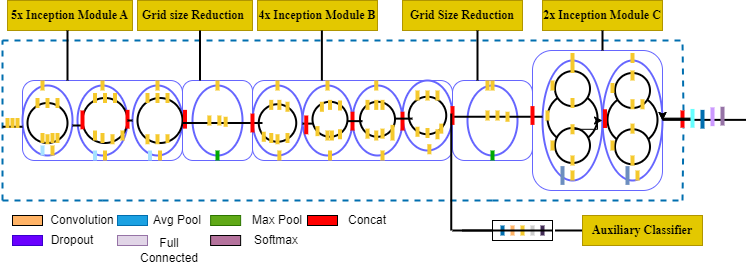
C. Szegedy et al., “Going deeper with convolutions,” Proc. IEEE Comput. Soc. Conf. Comput. Vis. Pattern Recognit., vol. 07-12-June-2015, pp. 1–9, Oct. 2015, doi: 10.1109/CVPR.2015.7298594.
Downloads
Published
How to Cite
Issue
Section
License
Copyright (c) 2026 50sea

This work is licensed under a Creative Commons Attribution 4.0 International License.