Explainable Hybrid Forex Trading: Integrating Fuzzy Price Action with AutoML
DOI:
https://doi.org/10.33411/IJIST/1886Keywords:
Hybrid Neuro-Symbolic AI, Automated Machine Learning (AutoML), TreeSHAP, FLAML, Explainable AI (XAI), Fuzzy LogicAbstract
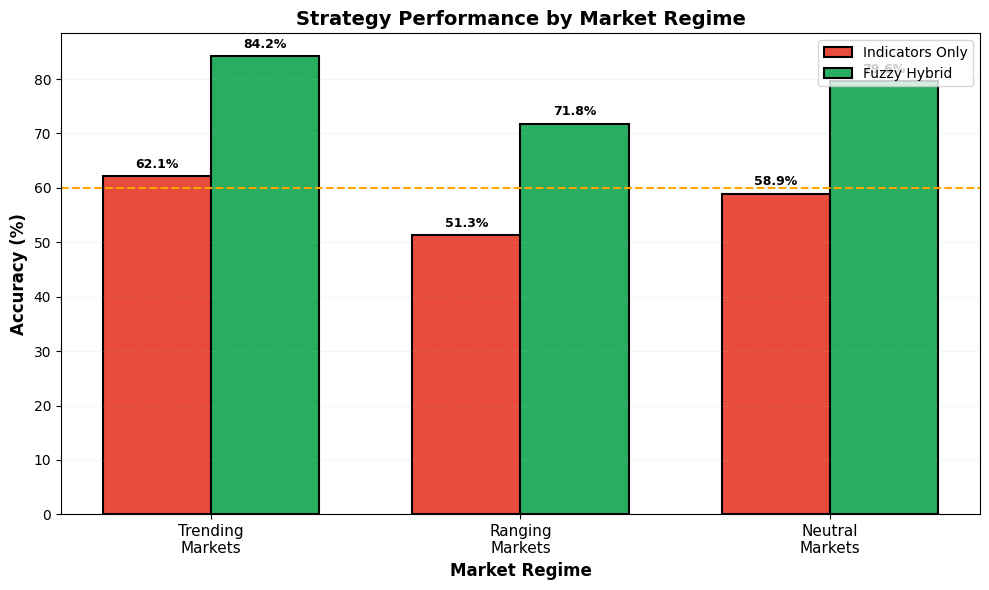
Financial markets today depend largely on opaque algorithms. Although they have strong predictive capability, they are often non-transparent, which creates difficulties in meeting compliance requirements and establishing trust. In this work, a new hybrid Neuro-Symbolic Trading System is introduced, which is designed for the EUR/USD currency pair in forex. The method combines the interpretability of Fuzzy Logic with the predictive capability of Automated Machine Learning (AutoML). Heuristic rules based on the experience of traders, like trend-line bounce-offs and geometric analysis of resistance levels, are converted to linguistic terms in the fuzzy logic environment. These rules are optimized using the FLAML (Fast and Lightweight AutoML) library. The effectiveness of the model was evaluated using a dataset comprising 372,379 instances of high-frequency M1 readings for the year 2024. In comparison to the 58.2% prediction accuracy of the conventional technical indicator-based system, the hybrid model has a 79.4% prediction accuracy, a precision of 78.1%, a recall of 77.6%, a Sharpe Ratio of 2.34, an ROI of 142.7%, and a maximum drawdown of 7.2%. Moreover, the proposed methodology makes use of an XAI layer called Time-Aware Explainable AI, which uses the ShaTS technique. This ensures that model decisions are supported by temporally-aware feature attribution in accordance with governance requirements [1]. Through the adoption of fuzzy logic, this research highlights the possibility of improving predictive accuracy while addressing the problem of the "Black Box".
References
“FINMA Guidance 08/2024 Governance and Risk Management when using Artificial Intelligence - MLL News Portal.” Accessed: May 19, 2026. [Online]. Available: https://www.mll-news.com/finma-guidance-08-2024-governance-and-risk-management-when-using-artificial-intelligence/?lang=en
Abhiram Tirumala, Rishi Bhatnager, “Designing a novel and high performance algorithmic trading model using evolutionary AutoML and technical analysis,” GECCO 2022 Companion - Proc. 2022 Genet. Evol. Comput. Conf., 2022, [Online]. Available: https://dl.acm.org/doi/10.1145/3520304.3529038
Diego Leon, Javier Sandoval, Andrea Cruz, German Hernandez & Oscar Sierra, “Deep Heterogeneous AutoML Trend Prediction Model for Algorithmic Trading in the USD/COP Colombian FX Market Through Limit Order Book (LOB),” SN Comput. Sci., vol. 5, no. 631, 2024, [Online]. Available: https://link.springer.com/article/10.1007/s42979-024-02930-1
S. S. Khurana, P. Singh, and N. K. Garg, “Revolutionize AI Trading Bots with AutoML-Based Multi-timeframe Bitcoin Price Prediction,” SN Comput. Sci. 2023 45, vol. 4, no. 5, pp. 492-, Jun. 2023, doi: 10.1007/S42979-023-01941-8.
D. K. Padhi, N. Padhy, B. Panda, and A. K. Bhoi, “AutoML Trading: A Rule-Based Model to Predict the Bull and Bearish Market,” J. Inst. Eng. Ser. B 2024 1054, vol. 105, no. 4, pp. 913–928, Mar. 2024, doi: 10.1007/S40031-024-01024-Z.
Henry Han, Jeffrey Yi-Lin Forrest, “Explainable machine learning for high frequency trading dynamics discovery,” Inf. Sci. (Ny)., vol. 684, 2024, [Online]. Available: https://dl.acm.org/doi/10.1016/j.ins.2024.121286
Niusha Shafiabady ,Nick Hadjinicolaou,Nadeesha Hettikankanamage,Ehsan MohammadiSavadkoohi,Robert M. X. Wu,James Vakilian, “eXplainable Artificial Intelligence (XAI) for improving organisational regility,” PLoS One, 2024, [Online]. Available: https://journals.plos.org/plosone/article?id=10.1371/journal.pone.0301429
Manuel Franco De La Peña, Ángel Luis Perales Gómez, “ShaTS: a Shapley-based explainability method for time series artificial intelligence models,” Futur. Gener. Comput. Syst., vol. 176, p. 108178, 2026, doi: https://doi.org/10.1016/j.future.2025.108178.
Xu Tian, ZongYi Tian,Saleh F. A. Khatib,Yan Wang, “Machine learning in internet financial risk management: A systematic literature review,” PLoS One, 2024, doi: https://doi.org/10.1371/journal.pone.0300195.
Mahdi Yarmohammadi Jalali Farahani, “Recognizing Behavior Patterns in Financial Markets based on Candlestick Charts and Fuzzy Logic,” J. Electr. Syst., vol. 20, no. 3, pp. 6628–6640, 2024, doi: 10.52783/jes.6982.
Chi Wang, Qingyun Wu, Markus Weimer, Erkang Zhu, “FLAML: A Fast and Lightweight AutoML Library,” arXiv:1911.04706, 2021, [Online]. Available: https://arxiv.org/abs/1911.04706
Control and Cybernetics, “Fuzzy trading system on the forex market for deriving the portfolio of instruments,” Przem. Juszczuk, Lech Krus, vol. 51, no. 4, pp. 467–486, 2024, doi: 10.2478/candc-2022-0025.
Jurgita Černevičienė & Audrius Kabašinskas, “Explainable artificial intelligence (XAI) in finance: a systematic literature review,” Artif. Intell. Rev., vol. 57, 2024, [Online]. Available: https://link.springer.com/article/10.1007/s10462-024-10854-8
C.-A. Wilson and C.-A. Wilson, “Explainable AI in Finance: Addressing the Needs of Diverse Stakeholders,” Aug. 2025, doi: 10.56227/25.1.25.
Wei Jie Yeo, Wihan Van Der Heever, Rui Mao, Erik Cambria, Ranjan Satapathy & Gianmarco Mengaldo, “A comprehensive review on financial explainable AI,” Artif. Intell. Rev., vol. 58, no. 189, 2025, [Online]. Available: https://link.springer.com/article/10.1007/s10462-024-11077-7
Md Talha Mohsin, Nabid Bin Nasim, “Explaining the Unexplainable: A Systematic Review of Explainable AI in Finance,” arXiv:2503.05966, 2025, [Online]. Available: https://arxiv.org/abs/2503.05966
Albi Isufaj, Pablo Mollá, Helmut Prendinger, “Towards Explainable and Reliable AI in Finance,” arXiv:2510.26353, 2025, [Online]. Available: https://arxiv.org/abs/2510.26353
C. Kreiterling, “Design Principles for Explainable AI in Finance: A Multi-Stakeholder Framework,” Sep. 2025, doi: 10.2139/SSRN.5427074.
S. Toprak and M. Erel-Ozcevik, “Proof of AutoML: SDN based Secure Energy Trading with Blockchain in Disaster Case,” 2025 7th Int. Conf. Blockchain Comput. Appl. BCCA 2025, pp. 812–817, 2025, doi: 10.1109/BCCA66705.2025.11229529.
Jawaria Nasir, Hasnain Iftikhar, “A Hybrid LMD–ARIMA–Machine Learning Framework for Enhanced Forecasting of Financial Time Series: Evidence from the NASDAQ Composite Index,” Mathematics, vol. 13, no. 15, p. 2389, 2025, doi: https://doi.org/10.3390/math13152389.
S. M. Lundberg et al., “From local explanations to global understanding with explainable AI for trees,” Nat. Mach. Intell. 2020 21, vol. 2, no. 1, pp. 56–67, Jan. 2020, doi: 10.1038/s42256-019-0138-9.
Corne van Zyl, Xianming Ye, “Harnessing eXplainable artificial intelligence for feature selection in time series energy forecasting: A comparative analysis of Grad-CAM and SHAP,” Appl. Energy, vol. 353, p. 122079, 2024, doi: https://doi.org/10.1016/j.apenergy.2023.122079.
Paolo Giudici, Alessandro Piergallini, “Explainable Artificial Intelligence methods for financial time series,” Phys. A Stat. Mech. its Appl., vol. 655, p. 130176, 2024, doi: https://doi.org/10.1016/j.physa.2024.130176.
Phan Tien Dung, Paolo Giudici, “Sustainability, Accuracy, Fairness, and Explainability (SAFE) Machine Learning in Quantitative Trading,” Mathematics, vol. 13, no. 3, p. 442, 2025, doi: 10.3390/math13030442.
Wajih Abdallah, Majed Alruwaili, “DeepXFusion: A Hybrid Representation Learning and Explainability Framework for Trustworthy Machine Learning,” Proc. 18th Int. Conf. Agents Artif. Intell., vol. 4, pp. 3438–3445, 2026, [Online]. Available: https://www.scitepress.org/Papers/2026/144455/144455.pdf
Mayaz Uddin Gazi, “Flood Prediction and Forecasting Using Anns and Fuzzy Logic Model in Sylhet, Bangladesh,” Sciety, 2025, [Online]. Available: https://sciety.org/articles/activity/10.21203/rs.3.rs-6882638/v1
G. S. Deepan and T. Subbulakshmi, “Financial Planning and Decision Making for Students Using Fuzzy Logic,” Fuzzy Log. Appl. Comput. Sci. Math., pp. 159–171, Jan. 2023, doi: 10.1002/9781394175130.CH10;CTYPE:STRING:BOOK.
A. -, V. BHATTACHARJEE, and P. S. Bishnu, “Stock Price Forecasting Using Fuzzy Logic-Enhanced Deep Learning Models,” 2024, doi: 10.2139/SSRN.5023575.
Emine Yüksek Dizdar, “Comparison of Fuzzy, Intuitionistic Fuzzy, and Picture Fuzzy Regression Function Approaches for Forecasting the Dow Jones Financial Time Series,” Turkish J. Forecast., vol. 10, no. 1, 2026, doi: 10.34110/forecasting.1868623.
Miin Jong Hao, Yu Xuan Zheng, “Highway Travel-Time Forecasting with Greenshields Model-Based Cascaded Fuzzy Logic Systems,” Appl. Sci., vol. 15, no. 14, p. 7729, 2025, doi: https://doi.org/10.3390/app15147729.
Downloads
Published
How to Cite
Issue
Section
License
Copyright (c) 2026 50sea

This work is licensed under a Creative Commons Attribution 4.0 International License.