Impact of Solar PV and Wind Penetration on Dynamic Performance of VSC-MT-HVDC Systems
DOI:
https://doi.org/10.33411/IJIST/1961Keywords:
VSC-HVDC, Multi-Terminal HVDC, Renewable Energy Integration, Solar PV, Wind Power., Droop Control, Dynamic Stability, Fault Response, Power QualityAbstract
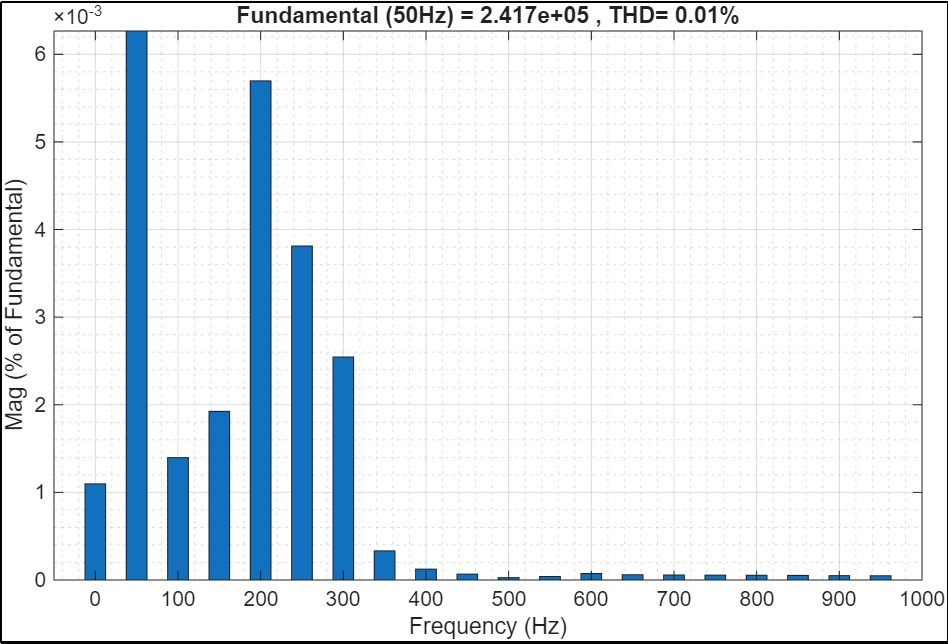
The rapid growth of renewable energy sources such as photovoltaic (PV) and wind energy is transforming modern power systems by introducing variable and distributed generation into transmission networks. Since these resources are often located far from load centers, flexible and efficient transmission technologies are required. Voltage-Source-Converter-based Multi-Terminal High-Voltage Direct-Current (VSC-MT-HVDC) systems provide a promising solution due to their fast dynamic response, independent active and reactive power control, improved power quality, and enhanced flexibility compared with conventional HVAC transmission. This paper investigates the impact of solar PV and wind penetration on the dynamic performance of a VSC-MT-HVDC system. A four-terminal, 1000 MW, 525 kV bipolar HVDC network with a 600 km transmission corridor was developed in MATLAB/Simulink by integrating renewable generation sources and decentralized DC voltage droop control. The proposed system was evaluated under variations in renewable penetration and representative fault conditions including DC pole-to-pole, DC pole-to-ground, and AC-side faults. The results demonstrate that the system maintains stable operation under renewable variability, with the post-fault DC voltage recovering to approximately 524.358 kV. The AC-side harmonic performance remained within acceptable limits, with a maximum total harmonic distortion (THD) of 1.126%. Furthermore, the VSC-MT-HVDC configuration achieved a transmission loss of approximately 5.6 MW, compared with 12.7 MW for an equivalent HVAC system over the same 600 km corridor, representing a reduction of around 55.9% in transmission losses. The findings confirm that properly coordinated droop control and protection strategies enable reliable integration of high renewable penetration while maintaining voltage stability, power quality, and transmission efficiency. These results highlight the suitability of VSC-MT-HVDC systems for future renewable-rich power networks.
References
“Renewable Energy Market Update - June 2023 – Analysis - IEA.” Accessed: Jul. 25, 2026. [Online]. Available: https://www.iea.org/reports/renewable-energy-market-update-june-2023
“Renewable capacity statistics 2023.” Accessed: Jul. 25, 2026. [Online]. Available: https://www.irena.org/Publications/2023/Mar/Renewable-capacity-statistics-2023
P. Kundur, “Power system stability and control,” 1994.
N. Flourentzou, V. G. Agelidis, and G. D. Demetriades, “VSC-based HVDC power transmission systems: An overview,” IEEE Trans. Power Electron., vol. 24, no. 3, pp. 592–602, 2009, doi: 10.1109/TPEL.2008.2008441.
D. Jovcic, “High Voltage Direct Current Transmission: Converters, Systems and DC Grids, Second Edition,” High Volt. Direct Curr. Transm. Convert. Syst. DC Grids, Second Ed., pp. 1–537, Jan. 2019, doi: 10.1002/9781119566632.
D. Van Hertem and M. Ghandhari, “Multi-terminal VSC HVDC for the European supergrid: Obstacles,” Renew. Sustain. Energy Rev., vol. 14, no. 9, pp. 3156–3163, Dec. 2010, doi: 10.1016/J.RSER.2010.07.068.
J. Beerten, S. Cole, and R. Belmans, “Modeling of multi-terminal vsc hvdc systems with distributed dc voltage control,” IEEE Trans. Power Syst., vol. 29, no. 1, pp. 34–42, Jan. 2014, doi: 10.1109/TPWRS.2013.2279268.
S. Debnath, J. Qin, B. Bahrani, M. Saeedifard, and P. Barbosa, “Operation, control, and applications of the modular multilevel converter: A review,” IEEE Trans. Power Electron., vol. 30, no. 1, pp. 37–53, 2015, doi: 10.1109/TPEL.2014.2309937.
“An innovative modular multilevel converter topology suitable for a wide power range | IEEE Conference Publication | IEEE Xplore.” Accessed: May 14, 2025. [Online]. Available: https://ieeexplore.ieee.org/document/1304403
F. Blaabjerg, F. Iov, R. Teodorescu, and Z. Chen, “Power Electronics in Renewable Energy Systems,” 2006 12th Int. Power Electron. Motion Control Conf., pp. 1–17, Aug. 2006, doi: 10.1109/EPEPEMC.2006.4778368.
T. Ackermann, “Wind Power in Power Systems,” Wind Power Power Syst., pp. 1–1049, Jan. 2012, doi: 10.1002/9781119941842.
R. H. Chandio et al., “Control and protection of MMC-based HVDC systems: A review,” Energy Reports, vol. 9, pp. 1571–1588, Dec. 2023, doi: 10.1016/J.EGYR.2022.12.056.
A. Visakh and R. M. Shereef, “Protection of HVDC Grids Against Temporary and Permanent Faults,” 2018 Int. Conf. Control. Power, Commun. Comput. Technol. ICCPCCT 2018, pp. 239–244, Dec. 2018, doi: 10.1109/ICCPCCT.2018.8574325.
H. Dong, K. Liu, M. Su, W. Zou, and X. Ma, “Droop Control Design of MTDC Systems with Large-Scale Renewable Integration based on ANFIS,” 2021 3rd Asia Energy Electr. Eng. Symp. AEEES 2021, pp. 650–654, Mar. 2021, doi: 10.1109/AEEES51875.2021.9403080.
J. Beerten, D. Van Hertem, and R. Belmans, “VSC MTDC systems with a distributed DC voltage control - A power flow approach,” 2011 IEEE PES Trondheim PowerTech Power Technol. a Sustain. Soc. POWERTECH 2011, 2011, doi: 10.1109/PTC.2011.6019434.
“Standard for Interconnection and Interoperability of Inverter-Based Resources (IBRs) Interconnecting with Associated Transmission Electric Power Systems,” Feb. 2022, doi: 10.1109/IEEESTD.2022.9762253.
M. Bollen and F. Hassan, “Integration of Distributed Generation in the Power System,” Integr. Distrib. Gener. Power Syst., Oct. 2011, doi: 10.1002/9781118029039.
M. Radwan and S. P. Azad, “Protection of Multi-Terminal HVDC Grids: A Comprehensive Review,” Energies 2022, Vol. 15, Page 9552, vol. 15, no. 24, p. 9552, Dec. 2022, doi: 10.3390/EN15249552.
M. Saeedifard and R. Iravani, “Dynamic performance of a modular multilevel back-to-back HVDC system,” IEEE Trans. Power Deliv., vol. 25, no. 4, pp. 2903–2912, Oct. 2010, doi: 10.1109/TPWRD.2010.2050787.
“Power System Stability and Control | McGraw-Hill Education - Access Engineering.” Accessed: Jul. 25, 2026. [Online]. Available: https://www.accessengineeringlibrary.com/content/book/9781260473544
G. A. Ludin et al., “Technical and Economic Analysis of an HVDC Transmission System for Renewable Energy Connection in Afghanistan,” Sustain. 2022, Vol. 14, Page 1468, vol. 14, no. 3, p. 1468, Jan. 2022, doi: 10.3390/SU14031468.
A. Kalair, N. Abas, and N. Khan, “Comparative study of HVAC and HVDC transmission systems,” Renew. Sustain. Energy Rev., vol. 59, pp. 1653–1675, Jun. 2016, doi: 10.1016/J.RSER.2015.12.288.
Hassanien Ramadan A. Mohamed, Yasser Abdel-Rady I. Mohamed, “Analysis and Dynamic Stabilization of a High-Voltage VSC-MTDC Grid With DC Power Flow Controller Connected to Extremely Weak AC Systems,” IEEE Open J. Power Electron., vol. 5, 2024, [Online]. Available: https://ieeexplore.ieee.org/stamp/stamp.jsp?arnumber=10522826
Downloads
Published
How to Cite
Issue
Section
License
Copyright (c) 2026 50sea

This work is licensed under a Creative Commons Attribution 4.0 International License.