Expert Reasoning in Fragment-Level Quality Metadata Authoring for Learning-Sensitive Educational Video Adaptation
DOI:
https://doi.org/10.33411/IJIST/2012Keywords:
Mobile Learning, Human-in-the-Loop Annotation, Metadata Authoring, Educational Video, Learning-Sensitive Adaptation, Content-Aware AdaptationAbstract
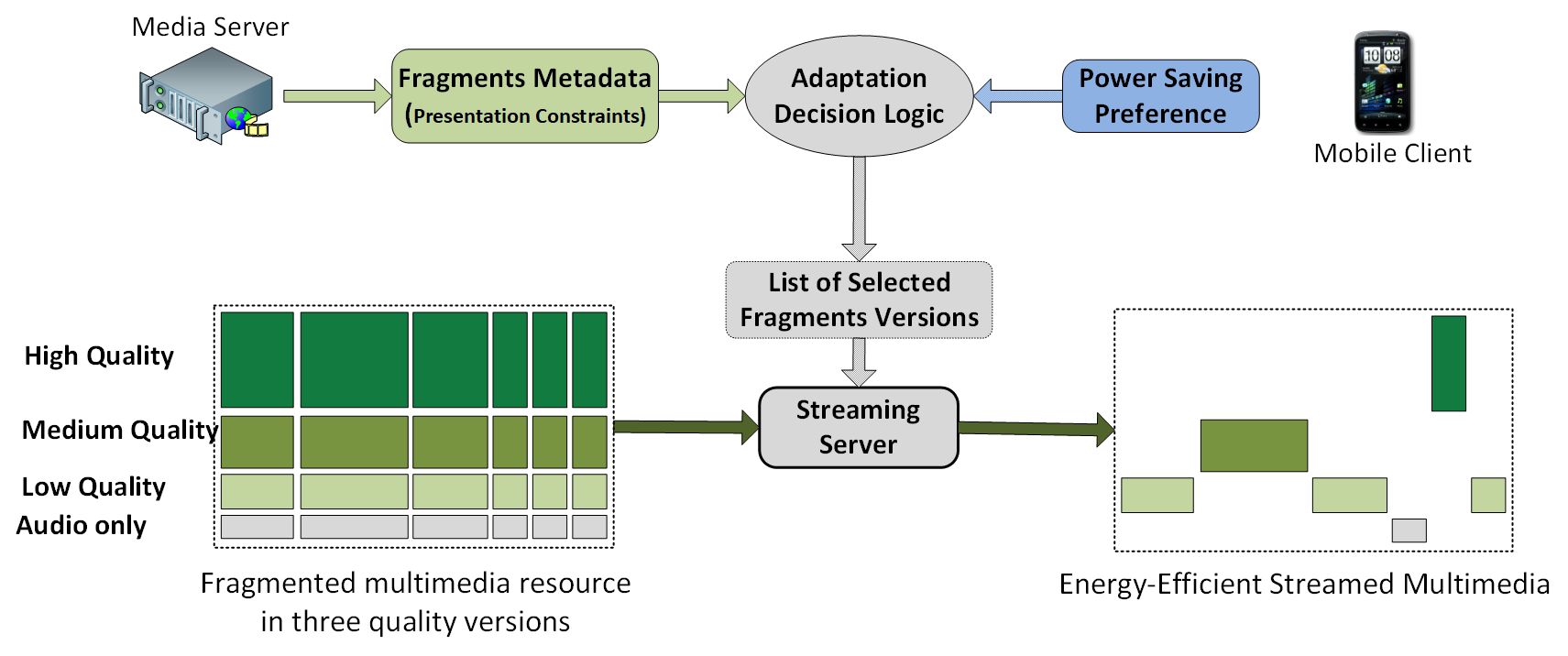
Limited battery power in mobile devices is an important concern in mobile learning activities based on educational multimedia. Power-saving multimedia adaptation approaches exist to extend battery life during multimedia streaming by reducing the quality of streamed multimedia. However, these approaches often do not consider the sensitivity of visual instructional content to quality reduction and instead rely on generic quality-of-experience metrics. In learning-sensitive educational video adaptation, visual quality reduction must be guided by the instructional importance in each video segment. This type of adaptation requires fragment-level metadata that identifies segment boundaries and specifies the minimum acceptable quality required to preserve perceived visual comprehensibility. Producing such metadata requires judgments about instructional meaning, visual clarity, and acceptable quality thresholds. This paper reports an exploratory study of expert reasoning during manual segment-level quality metadata authoring. Five experts at University of Southampton, UK reviewed an educational video in four presentation qualities. Their task was to identify fragment boundaries and assign the minimum acceptable quality (MAQ) required to preserve the perceived comprehensibility of instructional information. Think-aloud data and post-task questionnaire responses were analysed to identify decision cues and authoring strategies. Results indicated that the metadata generation task was perceived as clear, manageable, and feasible. The contribution of this study is to characterize the human reasoning involved in fragment-level quality metadata authoring and to derive implications for future semi-automated authoring tools.
References
M. Sharples, J. Taylor, and G. Vavoula, “A Theory of Learning for the Mobile Age,” Medien. neuen Kult., pp. 87–99, 2010, doi: 10.1007/978-3-531-92133-4_6.
S. K. S. Cheung, “A study on the use of mobile devices for distance learning,” Lect. Notes Comput. Sci. (including Subser. Lect. Notes Artif. Intell. Lect. Notes Bioinformatics), vol. 7411 LNCS, pp. 89–98, 2012, doi: 10.1007/978-3-642-32018-7_9/Save-Research.
A.-N. Moldovan and C. H. Muntean, “Towards Personalised and Adaptive Multimedia in M-learning Systems,” Proc. E-Learn 2011--World Conf. E-Learning Corp. Gov. Heal. High. Educ., pp. 782–791, 2011, Accessed: Aug. 26, 2026. [Online]. Available: https://www.learntechlib.org/primary/p/38807/
E. Navarrete, A. Nehring, S. Schanze, R. Ewerth, and A. Hoppe, “A Closer Look into Recent Video-based Learning Research: A Comprehensive Review of Video Characteristics, Tools, Technologies, and Learning Effectiveness,” Int. J. Artif. Intell. Educ. 2025 354, vol. 35, no. 4, pp. 1631–1694, May 2025, doi: 10.1007/S40593-025-00481-X.
C. Zhang, Z. Wang, Z. Fang, and X. Xiao, “Guiding student learning in video lectures: Effects of instructors’ emotional expressions and visual cues,” Comput. Educ., vol. 218, p. 105062, Sep. 2024, doi: 10.1016/J.COMPEDU.2024.105062.
M. A. Hoque, M. Siekkinen, and J. K. Nurminen, “Energy efficient multimedia streaming to mobile devices-A survey,” IEEE Commun. Surv. Tutorials, vol. 16, no. 1, pp. 579–597, Mar. 2014, doi: 10.1109/SURV.2012.111412.00051.
R. Trestian, A. N. Moldovan, O. Ormond, and G. M. Muntean, “Energy consumption analysis of video streaming to Android mobile devices,” Proc. 2012 IEEE Netw. Oper. Manag. Symp. NOMS 2012, pp. 444–452, 2012, doi: 10.1109/NOMS.2012.6211929.
Q. Tan, X. Zhang, and R. McGreal, “The 5 R Adaptation Framework for Location-Based Mobile Learning Systems,” 2011.
A. N. Moldovan, S. Weibelzahl, and C. H. Muntean, “Energy-aware mobile learning:Opportunities and challenges,” IEEE Commun. Surv. Tutorials, vol. 16, no. 1, pp. 234–265, Mar. 2014, doi: 10.1109/SURV.2013.071913.00194.
J. Zhang, D. Wu, S. Ci, H. Wang, and A. K. Katsaggelos, “Power-aware mobile multimedia: A survey (Invited Paper),” J. Commun., vol. 4, no. 9, pp. 600–613, 2009, doi: 10.4304/JCM.4.9.600-613.
M. A. Hoque, M. Siekkinen, J. K. Nurminen, M. Aalto, and S. Tarkoma, “Mobile multimedia streaming techniques: QoE and energy saving perspective,” Pervasive Mob. Comput., vol. 16, no. PA, pp. 96–114, Jan. 2015, doi: 10.1016/J.PMCJ.2014.05.004.
C. J. Lian, S. Y. Chien, C. P. Lin, P. C. Tseng, and L. G. Chen, “Power-aware multimedia: Concepts and design perspectives,” IEEE Circuits Syst. Mag., vol. 7, no. 2, pp. 26–34, 2007, doi: 10.1109/MCAS.2007.4299440.
A. N. Moldovan and C. H. Muntean, “Subjective assessment of bitdetecta mechanism for energy-aware multimedia content adaptation,” IEEE Trans. Broadcast., vol. 58, no. 3, pp. 480–492, 2012, doi: 10.1109/TBC.2012.2191688.
D. Kelly, J. R. Delannoy, J. McDonald, C. Markham, and J. M. Donald, “Assessing Power Saving Techniques and Their Impact on E-learning Users,” China Irel. Int. Conf. Inf. Commun. Technol., pp. 181–187, 2009.
“Energy-Aware Streaming Multimedia Adaptation: An Educational Perspective | Request PDF.” Accessed: Aug. 26, 2026. [Online]. Available: https://www.researchgate.net/publication/299448882_Energy-Aware_Streaming_Multimedia_Adaptation_An_Educational_Perspective
X. Ma et al., “QAVA: QoE-Aware Adaptive Video Bitrate Aggregation for HTTP Live Streaming Based on Smart Edge Computing,” IEEE Trans. Broadcast., vol. 68, no. 3, pp. 661–676, Sep. 2022, doi: 10.1109/TBC.2022.3171131.
M. H. Bin Waheed et al., “A New Efficient Architecture for Adaptive Bit-Rate Video Streaming,” Sustain. 2021, Vol. 13, Page 4541, vol. 13, no. 8, p. 4541, Apr. 2021, doi: 10.3390/SU13084541.
E. İren and A. Kantarci, “Content Aware Video Streaming with MPEG DASH Technology,” TEM J., vol. 11, no. 2, pp. 611–619, May 2022, doi: 10.18421/TEM112-15.
W. ur Rahman and E. N. Huh, “Content-aware QoE optimization in MEC-assisted Mobile video streaming,” Multimed. Tools Appl. 2023 8227, vol. 82, no. 27, pp. 42053–42085, Apr. 2023, doi: 10.1007/S11042-023-15163-W.
A. Zabrovskiy, P. Agrawal, C. Timmerer, and R. Prodan, “FAUST: Fast Per-Scene Encoding Using Entropy-Based Scene Detection and Machine Learning,” Conf. Open Innov. Assoc. Fruct, vol. 2021-October, pp. 267–278, 2021, doi: 10.23919/FRUCT53335.2021.9599963.
A. Neparidze et al., “Deep Explainable Content-Aware Per-Scene Video Encoding,” 2024 Int. Conf. Comput. Netw. Commun. ICNC 2024, pp. 490–494, 2024, doi: 10.1109/ICNC59896.2024.10555944.
G. Gao, L. Dong, H. Zhang, Y. Wen, and W. Zeng, “Content-Aware Personalised Rate Adaptation for Adaptive Streaming via Deep Video Analysis,” IEEE Int. Conf. Commun., vol. 2019-May, May 2019, doi: 10.1109/ICC.2019.8761156.
J. A. Ghauri, S. Hakimov, and R. Ewerth, “Classification of Important Segments in Educational Videos using Multimodal Features,” CEUR Workshop Proc., vol. 2699, Oct. 2020, Accessed: Aug. 26, 2026. [Online]. Available: https://arxiv.org/pdf/2010.13626
S. A. Jalal, N. Gibbins, D. Millard, B. Al-Hashimi, and N. R. Aljohani, “Content-aware power saving multimedia adaptation for mobile learning,” Int. Conf. Next Gener. Mob. Appl. Serv. Technol., pp. 256–261, Nov. 2013, doi: 10.1109/NGMAST.2013.53.
C. H. Lin, J. C. Liu, and C. W. Liao, “Energy analysis of multimedia video decoding on mobile handheld devices,” Proc. - 2007 Int. Conf. Multimed. Ubiquitous Eng. MUE 2007, pp. 120–125, 2007, doi: 10.1109/MUE.2007.125.
T. Stockhammer, “Dynamic adaptive streaming over HTTP - Standards and design principles,” MMSys’11 - Proc. 2011 ACM Multimed. Syst. Conf., pp. 133–143, Feb. 2011, doi: 10.1145/1943552.1943572.
K. Spiteri, R. Sitaraman, and D. Sparacio, “From theory to practice: Improving Bitrate adaptation in the DASH reference player,” ACM Trans. Multimed. Comput. Commun. Appl., vol. 15, no. 2s, Aug. 2019, doi: 10.1145/3336497;TAXONOMY:TAXONOMY:ACM-PUBTYPE;PAGEGROUP:STRING:PUBLICATION.
O. Machidon, J. Asprov, T. Fajfar, and V. Pejović, “Context-aware adaptation of mobile video decoding resolution,” Multimed. Tools Appl. 2022 8212, vol. 82, no. 12, pp. 17599–17630, Oct. 2022, doi: 10.1007/S11042-022-13787-Y.
J. Meng, Q. Xu, and Y. C. Hu, Proactive {Energy-Aware} Adaptive Video Streaming on Mobile Devices. 2021. Accessed: Aug. 26, 2026. [Online]. Available: https://www.usenix.org/conference/atc21/presentation/meng
C. Yue, S. Sen, B. Wang, Y. Qin, and F. Qian, “Energy considerations for ABR video streaming to smartphones: Measurements, models and insights,” MMSys 2020 - Proc. 2020 Multimed. Syst. Conf., pp. 153–165, May 2020, doi: 10.1145/3339825.3391867;CTYPE:STRING:BOOK.
C. Diaz, A. Fernandez, F. Sacristan, and N. Garcia, “Energy-and Quality-Aware Video Request Policy for Wireless Adaptive Streaming Clients,” IEEE Trans. Consum. Electron., vol. 66, no. 4, pp. 366–375, Nov. 2020, doi: 10.1109/TCE.2020.3034619.
G. Kim, D. Lee, and M. Song, “Design and Implementation of Bitrate Adaptation Schemes for Power Capping in Wi-Fi Video Streaming,” IEEE Access, vol. 8, pp. 22581–22591, 2020, doi: 10.1109/ACCESS.2020.2969696.
C. G. Bampis, Z. Li, A. K. Moorthy, I. Katsavounidis, A. Aaron, and A. C. Bovik, “Study of temporal effects on subjective video quality of experience,” IEEE Trans. Image Process., vol. 26, no. 11, pp. 5217–5231, Nov. 2017, doi: 10.1109/TIP.2017.2729891.
B. O. Turkkan et al., “GreenABR: Energy-Aware Adaptive Bitrate Streaming with Deep Reinforcement Learning,” MMSys 2022 - Proc. 13th ACM Multimed. Syst. Conf., pp. 150–163, Aug. 2022, doi: 10.1145/3524273.3528188;WGROUP:STRING:ACM.
A. Bunt, G. Carenini, and C. Conati, “Adaptive content presentation for the Web,” Lect. Notes Comput. Sci. (including Subser. Lect. Notes Artif. Intell. Lect. Notes Bioinformatics), vol. 4321 LNCS, pp. 409–432, 2007, doi: 10.1007/978-3-540-72079-9_13/SAVE-RESEARCH.
M. Venkata Phani Kumar, C. Timmerer, and H. Hellwagner, “Mipso: Multi-period per-scene optimization for http adaptive streaming,” Proc. - IEEE Int. Conf. Multimed. Expo, vol. 2020-July, Jul. 2020, doi: 10.1109/ICME46284.2020.9102775.
M. Bhat, J. M. Thiesse, and P. Le Callet, “A case study of machine learning classifiers for real-time adaptive resolution prediction in video coding,” Proc. - IEEE Int. Conf. Multimed. Expo, vol. 2020-July, Jul. 2020, doi: 10.1109/ICME46284.2020.9102934.
N. Souane, M. Bourenane, and Y. Douga, “Deep Reinforcement Learning-Based Approach for Video Streaming: Dynamic Adaptive Video Streaming over HTTP,” Appl. Sci. 2023, Vol. 13, Page 11697, vol. 13, no. 21, p. 11697, Oct. 2023, doi: 10.3390/APP132111697.
V. V. Menon, J. Zhu, P. T. Rajendran, H. Amirpour, P. Le Callet, and C. Timmerer, “Just Noticeable Difference-Aware Per-Scene Bitrate-Laddering for Adaptive Video Streaming,” Proc. - IEEE Int. Conf. Multimed. Expo, vol. 2023-July, pp. 1673–1678, 2023, doi: 10.1109/ICME55011.2023.00288.
Y. Lu et al., “ABUV: Adaptive bitrate and upsampling for video streaming on mobile devices,” Comput. Networks, vol. 257, p. 110994, Feb. 2025, doi: 10.1016/J.COMNET.2024.110994.
S. A. Jalal, N. Gibbins, D. Millard, B. Al-Hashimi, and N. R. Aljohani, “Energy-aware adaptation of educational multimedia in mobile learning,” ACM Int. Conf. Proceeding Ser., pp. 434–439, 2013, doi: 10.1145/2536853.2536896;PAGE:STRING:ARTICLE/CHAPTER.
A. N. Moldovan, C. A. Moraru, and C. H. Muntean, “MediaMTool: Multimedia content management tool,” IEEE Int. Symp. Broadband Multimed. Syst. Broadcast. BMSB 2011 - Conf. Program., 2011, doi: 10.1109/BMSB.2011.5954907.
A. N. Moldovan and C. H. Muntean, “DQAMLearn: Device and QoE-Aware Adaptive Multimedia Mobile Learning Framework,” IEEE Trans. Broadcast., vol. 67, no. 1, pp. 185–200, Mar. 2021, doi: 10.1109/TBC.2020.3028338.
A. Molnar, “Content type and perceived multimedia quality in mobile learning,” Multimed. Tools Appl. 2016 7620, vol. 76, no. 20, pp. 21613–21627, Nov. 2016, doi: 10.1007/S11042-016-4062-2.
A. Molnar, “The effect of content-type and video adaptation on information assimilation,” ACM Int. Conf. Proceeding Ser., pp. 123–127, Nov. 2018, doi: 10.1145/3282353.3282354;PAGEGROUP:STRING:PUBLICATION.
M. McClelland, “Metadata Standards for Educational Resources,” Computer (Long. Beach. Calif)., vol. 36, no. 11, pp. 107–109, Nov. 2003, doi: 10.1109/MC.2003.1244540.
P. Ingavélez-Guerra, S. Otón-Tortosa, J. Hilera-González, and M. Sánchez-Gordón, “The use of accessibility metadata in e-learning environments: a systematic literature review,” Univers. Access Inf. Soc. 2021 222, vol. 22, no. 2, pp. 445–461, Dec. 2021, doi: 10.1007/S10209-021-00851-X.
W. Simao De Deus and E. Francine Barbosa, “The Use of Metadata in Open Educational Resources Repositories: An Exploratory Study,” Proc. - 2020 IEEE 44th Annu. Comput. Software, Appl. Conf. COMPSAC 2020, pp. 123–132, Jul. 2020, doi: 10.1109/COMPSAC48688.2020.00025.
P. S. Chiu, H. C. Chen, Y. M. Huang, C. J. Liu, M. C. Liu, and M. H. Shen, “A video annotation learning approach to improve the effects of video learning,” Innov. Educ. Teach. Int., vol. 55, no. 4, pp. 459–469, Jul. 2018, doi: 10.1080/14703297.2016.1213653.
“(PDF) Characterising Video Segments to Support Learning.” Accessed: Aug. 26, 2026. [Online]. Available: https://www.researchgate.net/publication/346975350_Characterising_Video_Segments_to_Support_Learning
B. Memarian and T. Doleck, “Human-in-the-loop in artificial intelligence in education: A review and entity-relationship (ER) analysis,” Comput. Hum. Behav. Artif. Humans, vol. 2, no. 1, p. 100053, Jan. 2024, doi: 10.1016/J.CHBAH.2024.100053.
C. N. C. Lam and H. Habil, “The Use of Video Annotation in Education: A Review,” Asian J. Univ. Educ., vol. 17, no. 4, pp. 84–94, Oct. 2021, doi: 10.24191/AJUE.V17I4.16208.
E. Duval, W. Hodgins, S. Sutton, and S. L. Weibel, “Metadata Principles and Practicalities,” D-Lib Mag., vol. 8, no. 4, Apr. 2002, doi: 10.1045/APRIL2002-WEIBEL.
“Usability Engineering - Jakob Nielsen - Google Books.” Accessed: Aug. 27, 2026. [Online]. Available: https://books.google.com.pk/books?id=95As2OF67f0C&printsec=copyright&redir_esc=y#v=onepage&q&f=false
Downloads
Published
How to Cite
Issue
Section
License
Copyright (c) 2026 50sea

This work is licensed under a Creative Commons Attribution 4.0 International License.