The ANN Prediction for Viscous Dissipative Nanofluid Flow on Stagnation Point Flow Over Stretching Sheet
Keywords:
Bvp4c Approach, Artificial Neural Network, Viscous Dissipation, Stagnation Point, Levenberg Marquardt Technique, Nanofluid, Heat Transfer, Boundary Layer, Stretching SheetAbstract
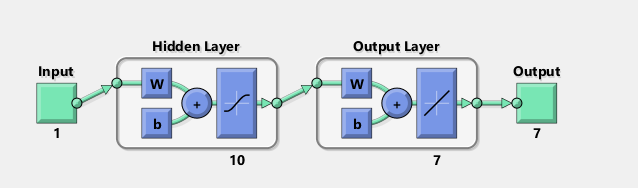
This research work presents the combined influence of viscous dissipation and chemical reaction on convective heat and mass transfer in a boundary layer stagnation-point flow of a nanofluid over a stretching sheet. Two types of flow, assisting and opposing, have been considered in this study with the effects of thermophoresis and Brownian diffusion in nanofluid model. The simultaneous impact of viscous dissipation and chemical reaction is of great importance in several practical engineering and thermodynamic processes. Using accurate similarity transformations, the governing nonlinear partial differential equations have been transformed into a set of ordinary differential equations. The bvp4c solver in MATLAB was used to solve these equations numerically with the help of collocation method and obtained the bank of data for artificial neural network (ANN) scheme. A comprehensive investigation was conducted to assess the impact of critical parameters namely, the number of Prandtl particles, Schmidt's numbers, Eckert Number, reaction rate parameter and nanoparticle volume fraction on the velocity, temperature, and concentration profiles. Technique-based neural networks with Levenberg-Marquardt scheme through the backpropagation algorithm has applied on stored data after training. The performance evaluation is such as absolute error, transition state, fitness curves and mean square error. For accurate prediction of physical parameters with reduced computation, The ANN framework was used. The mean squared error of the present study was set to 1.0×10^(-8), and the Prandtl, Lewis and Schmidt numbers were determined to characterize the thermal and mass transport properties of the fluid. The results from the ANN model have shown strong consistency with those obtained from numerical solutions, providing a reliable approach for investigating complex boundary layer problems.
References
J. Koo and C. Kleinstreuer, “Viscous dissipation effects in microtubes and microchannels,” Int. J. Heat Mass Transf., vol. 47, no. 14–16, pp. 3159–3169, Jul. 2004, doi: 10.1016/J.IJHEATMASSTRANSFER.2004.02.017.
P. K. Kameswaran, M. Narayana, P. Sibanda, and P. V. S. N. Murthy, “Hydromagnetic nanofluid flow due to a stretching or shrinking sheet with viscous dissipation and chemical reaction effects,” Int. J. Heat Mass Transf., vol. 55, no. 25–26, pp. 7587–7595, Dec. 2012, doi: 10.1016/J.IJHEATMASSTRANSFER.2012.07.065.
M. Sheikholeslami, S. Abelman, and D. D. Ganji, “Numerical simulation of MHD nanofluid flow and heat transfer considering viscous dissipation,” Int. J. Heat Mass Transf., vol. 79, pp. 212–222, Dec. 2014, doi: 10.1016/J.IJHEATMASSTRANSFER.2014.08.004.
T. W. Ting, Y. M. Hung, and N. Guo, “Field-synergy analysis of viscous dissipative nanofluid flow in microchannels,” Int. J. Heat Mass Transf., vol. 73, pp. 483–491, 2014, doi: 10.1016/j.ijheatmasstransfer.2014.02.041.
D. Gopal, S. Saleem, S. Jagadha, F. Ahmad, A. Othman Almatroud, and N. Kishan, “Numerical analysis of higher order chemical reaction on electrically MHD nanofluid under influence of viscous dissipation,” Alexandria Eng. J., vol. 60, no. 1, pp. 1861–1871, Feb. 2021, doi: 10.1016/J.AEJ.2020.11.034.
W. Abbas, A. M. Megahed, and E. Fares, “The impact of a chemical reaction on the heat and mass transfer mechanisms in a dissipative and radiative nanofluid flow over a nonlinear stretching sheet,” Sci. Reports 2024 141, vol. 14, no. 1, pp. 7712-, Apr. 2024, doi: 10.1038/s41598-024-57952-9.
M. J. Uddin, O. A. Bég, and N. Amin, “Hydromagnetic transport phenomena from a stretching or shrinking nonlinear nanomaterial sheet with Navier slip and convective heating: A model for bio-nano-materials processing,” J. Magn. Magn. Mater., vol. 368, pp. 252–261, Nov. 2014, doi: 10.1016/J.JMMM.2014.05.041.
G. C. Yanhai Lin, Liancun Zheng, Xinxin Zhang, Lianxi Ma, “MHD pseudo-plastic nanofluid unsteady flow and heat transfer in a finite thin film over stretching surface with internal heat generation,” Int. J. Heat Mass Transf., vol. 84, pp. 903–911, 2015, doi: https://doi.org/10.1016/j.ijheatmasstransfer.2015.01.099.
Z. Nisar, B. Ahmed, A. Aziz, K. Muhammad, H. A. E. W. Khalifa, and I. Ahmad, “Mathematical modeling and analysis for radiative MHD peristaltic flow of Bingham nanofluid,” ZAMM Zeitschrift fur Angew. Math. und Mech., vol. 104, no. 11, p. e202300840, Nov. 2024, doi: 10.1002/ZAMM.202300840
M. Jawad et al., “Chemical reaction impact on Buongiorno model for trihybrid nanofluid blood flow in a squeezed porous channel using the Levenberg–Marquardt neural network algorithm,” Results Eng., vol. 25, p. 104252, Mar. 2025, doi: 10.1016/J.RINENG.2025.104252.
M. Alrehili, “Stagnation flow of a nanofluid with rough surface and energy dissipation: A tangent hyperbolic model with practical engineering uses,” Results Eng., vol. 26, p. 104825, Jun. 2025, doi: 10.1016/J.RINENG.2025.104825.
T. Hayat, S. Amjad, Z. Nisar, and A. Alsaedi, “Peristalsis of hybrid nanomaterial in convectively heated asymmetric configuration,” J. Therm. Anal. Calorim. 2024 1501, vol. 150, no. 1, pp. 175–185, Dec. 2024, doi: 10.1007/S10973-024-13790-5.
L. N. Howard, “Heat transport by turbulent convection,” J. Fluid Mech., vol. 17, no. 3, pp. 405–432, 1963, doi: 10.1017/S0022112063001427.
G. O. Hughes, R. W. Griffiths, “Horizontal Convection,” AnRFM, vol. 40, no. 1, pp. 185–208, 2008, doi: 10.1146/ANNUREV.FLUID.40.111406.102148.
R. B. Stull, “A Convective Transport Theory for Surface Fluxes,” J. Atmos. Sci., vol. 51, no. 1, pp. 3–22, Jan. 1994, doi: 10.1175/1520-0469(1994)051.
N. S. Wahid, N. M. Arifin, N. S. Khashi’ie, I. Pop, N. Bachok, and E. H. Hafidzuddin, “MHD hybrid nanofluid flow with convective heat transfer over a permeable stretching/shrinking surface with radiation,” Int. J. Numer. Methods Heat Fluid Flow, vol. 32, no. 5, pp. 1706–1727, Aug. 2021, doi: 10.1108/HFF-04-2021-0263.
M. A. Z. Raja, A. Latif, M. Shamim, K. S. Nisar, and M. Shoaib, “A stochastic numerical analysis for viscoelastic fluid traversing a permeable perpendicular surface,” Int. Commun. Heat Mass Transf., vol. 165, p. 108996, Jun. 2025, doi: 10.1016/J.ICHEATMASSTRANSFER.2025.108996.
W. A. Khan and I. Pop, “Boundary-layer flow of a nanofluid past a stretching sheet,” Int. J. Heat Mass Transf., vol. 53, no. 11–12, pp. 2477–2483, May 2010, doi: 10.1016/J.IJHEATMASSTRANSFER.2010.01.032.
M. A. Z. Raja, A. Latif, M. Shamim, K. S. Nisar, and M. Shoaib, “Design of artificial neural network for buongiorno model with nanofluids flow through stretching sheet,” Case Stud. Therm. Eng., vol. 69, p. 106054, May 2025, doi: 10.1016/J.CSITE.2025.106054.
S. Suresh and S. R. Shanthi, “Mathematical model of steady incompressible nanofluid for heat transfer applications using MATLAB®,” Micro Nanofluid Convect. with Magn. F. Eff. Heat Mass Transf. Appl. using MATLAB®, pp. 31–58, Jan. 2022, doi: 10.1016/B978-0-12-823140-1.00003-8.
A. Latif, S. Iftikhar, H. Ali, S. Sheraz Asghar, “MatLab Bvp4c Technique to Compute Thermophoresis and Brownian Motion in Nanofluid Flow Over a Transient Stretching Sheet,” Int. J. Innov. Sci. Technol., vol. 7, no. 3, pp. 2171–2183, Sep. 2025, doi: 10.33411/IJIST/1554.
B. Vaferi, F. Samimi, E. Pakgohar, and D. Mowla, “Artificial neural network approach for prediction of thermal behavior of nanofluids flowing through circular tubes,” Powder Technol., vol. 267, pp. 1–10, Nov. 2014, doi: 10.1016/J.POWTEC.2014.06.062.
I. M. Alarifi, H. M. Nguyen, A. N. Bakhtiyari, and A. Asadi, “Feasibility of ANFIS-PSO and ANFIS-GA Models in Predicting Thermophysical Properties of Al2O3-MWCNT/Oil Hybrid Nanofluid,” Mater. 2019, Vol. 12, Page 3628, vol. 12, no. 21, p. 3628, Nov. 2019, doi: 10.3390/MA12213628.
M. Hemmat Esfe et al., “Optimization, modeling and accurate prediction of thermal conductivity and dynamic viscosity of stabilized ethylene glycol and water mixture Al2O3 nanofluids by NSGA-II using ANN,” Int. Commun. Heat Mass Transf., vol. 82, pp. 154–160, Mar. 2017, doi: 10.1016/J.ICHEATMASSTRANSFER.2016.08.015.
M. Hemmat Esfe, “Designing an artificial neural network using radial basis function (RBF-ANN) to model thermal conductivity of ethylene glycol–water-based TiO2 nanofluids,” J. Therm. Anal. Calorim. 2016 1273, vol. 127, no. 3, pp. 2125–2131, Aug. 2016, doi: 10.1007/S10973-016-5725-Y.
H. Pourpasha, P. Farshad, and S. Zeinali Heris, “Modeling and optimization the effective parameters of nanofluid heat transfer performance using artificial neural network and genetic algorithm method,” Energy Reports, vol. 7, pp. 8447–8464, Nov. 2021, doi: 10.1016/J.EGYR.2021.10.121.
Downloads
Published
How to Cite
Issue
Section
License
Copyright (c) 2026 50SEA

This work is licensed under a Creative Commons Attribution 4.0 International License.