AI-Driven Deep Learning Water Resource Management System for Crops in Pakistan
DOI:
https://doi.org/10.33411/IJIST/1898Keywords:
Artificial Intelligence, Deep Learning, Hybrid CNN-LSTM, Water Resource Management, Precision AgricultureAbstract
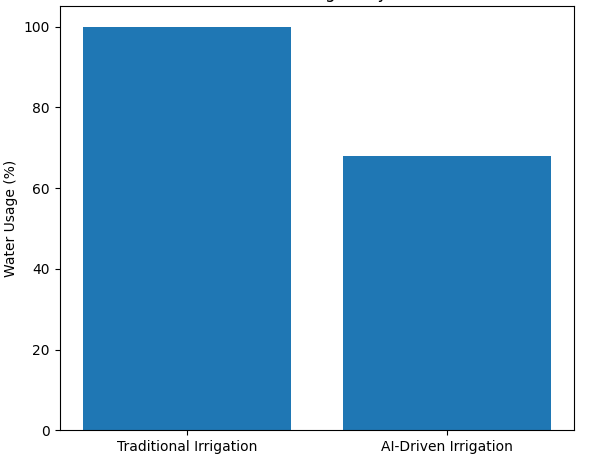
Agriculture is one of the pillars of the Pakistani economy and the utilization of water in the fields significantly impacts productivity and sustainability. However, water scarcity, irregular rainfall, the broader impact of climate change, and a reliance on the farmer's own decisions for irrigation remain challenges in the sector. To address these gaps, an Artificial Intelligence (AI) based Hybrid Convolutional Neural Network – Long Short-Term Memory (CNN-LSTM) framework is proposed that enables intelligent water resource management and crop irrigation forecasting in Pakistan. The proposed system combines two complementary datasets, one for Pakistan weather (41,125 records) and one for agricultural crop production (33,125 records) to form a combined corpus of 74,250 records that include temperature, rainfall, humidity, wind speed, atmospheric pressure, crop type, cultivated area, yield, and seasonal information. The full corpus was split into a training, validation and test set of 70, 15 and 15 respectively. The model training process was preceded by a standard preprocessing pipeline, which involved handling missing values, Min–Max normalization, label encoding of categorical features, preparing sequences using a sliding window, and light augmentation. CNN layers are used to capture the spatial relationships among agronomic features and meteorological features within the hybrid network, and LSTM layers are used to capture the temporal features in the hybrid network, such as seasonal irrigation cycles and rainfall trends. The hybrid model reached an overall accuracy of 96.8%, with Precision = 95.9%, Recall = 96.3%, and F1-score = 96.1%. The error scores were also low: RMSE = 0.021 and MAE = 0.017. The proposed model outperformed the SVM, Random Forest, standalone CNN and standalone LSTM baseline by 2.7% to 8.1% in terms of accuracy, the highest improvement being achieved against SVM and the lowest improvement being achieved against the best CNN-LSTM baseline. On the water-use side, the simulation results suggest a potential reduction of approximately 32% compared to traditional water use when simulated scheduling was performed based on water use predictions from the model. The framework can be useful for farmers, extension officers, and policymakers to make informed decisions on irrigation and contribute to the overall efforts of climate-smart and sustainable agriculture in Pakistan.
References
Ashraf A. Ahmed, Sakina Sayed, “Applications of machine learning to water resources management: A review of present status and future opportunities,” J. Clean. Prod., vol. 441, 2024, [Online]. Available: https://www.sciencedirect.com/science/article/pii/S0959652624001628
“Water Resources Management under Climate Change: A Review.” Accessed: May 23, 2026. [Online]. Available: https://www.mdpi.com/2071-1050/16/9/3590
R. K. Love Kumar, “Water Quality Assessment and Monitoring in Pakistan: A Comprehensive Review,” Sustainability, vol. 15, no. 7, p. 6246, 2023, doi: https://doi.org/10.3390/su15076246.
Zhigang Ye, Shan Yin, Yin Cao & Yong Wang, “AI-driven optimization of agricultural water management for enhanced sustainability,” Sci. Rep., 2024, [Online]. Available: https://www.nature.com/articles/s41598-024-76915-8
Jingxin Yu, Qinglin Qu, “Deep learning for intelligent irrigation decision-making: A review,” Agric. Water Manag., vol. 320, p. 109836, 2025, doi: https://doi.org/10.1016/j.agwat.2025.109836.
“Artificial Intelligence in Hydrology: Advancements in Soil, Water Resource Management, and Sustainable Development.” Accessed: May 23, 2026. [Online]. Available: https://www.mdpi.com/2071-1050/17/5/2250
Hamid Kardan Moghaddam, Zahra Rahimzadeh kivi, “Sustainable water allocation under climate change: Deep learning approaches to predict drinking water shortages,” J. Environ. Manage., vol. 385, p. 125600, 2025, doi: https://doi.org/10.1016/j.jenvman.2025.125600.
Shazia Perveen, Amar-Ul-Haque, “Drinking water quality monitoring, assessment and management in Pakistan: A review,” Heliyon, vol. 9, no. 3, p. e13872, 2023, doi: https://doi.org/10.1016/j.heliyon.2023.e13872.
Yu Wen Chang, Wei Sun, “Advanced groundwater level forecasting with hybrid deep learning model: Tackling water challenges in Taiwan’s largest alluvial fan,” J. Hydrol., 2025, doi: 10.1016/j.jhydrol.2025.132887.
Q. Zhu, X. Yu, L. Zhao and L. Xu, “A Hybrid Deep Learning Model for Water Quality Prediction,” IEEE Access, vol. 13, 2025, doi: 10.1109/ACCESS.2025.3580741.
Manan Sharma, Samjhana Rawat Sharma, “Advanced Hydrological Simulation and Hybrid CNN-LSTM Models for Sustainable Water Resource Management in Nepal,” J. Inf. Syst. Eng. Manag., 2025, [Online]. Available: https://jisem-journal.com/index.php/journal/article/view/5059
S. D. Latif and A. N. Ahmed, “Streamflow Prediction Utilizing Deep Learning and Machine Learning Algorithms for Sustainable Water Supply Management,” Water Resour. Manag. 2023 378, vol. 37, no. 8, pp. 3227–3241, Mar. 2023, doi: 10.1007/S11269-023-03499-9.
Yu-fei Yan, Han-xiao Liu, “Advances in coupling machine learning with hydrological simulation: A review,” Water Sci. Eng., vol. 19, no. 1, pp. 1–10, 2026, doi: https://doi.org/10.1016/j.wse.2026.01.002.
Jared D. Willard, Charuleka Varadharajan, Xiaowei Jia, Vipin Kumar, “Time Series Predictions in Unmonitored Sites: A Survey of Machine Learning Techniques in Water Resources,” arXiv:2308.09766, 2023, [Online]. Available: https://arxiv.org/abs/2308.09766
R. J. Chin and S. H. Lai, “Editorial: Integration Of Hydrological Models And Machine Learning Techniques For Water Resources Management,” J. Civ. Eng. Sci. Technol., vol. 16, no. 1, pp. 1–5, Apr. 2025, doi: 10.33736/JCEST.9191.2025.
A. Khosravi and M. Ashkpour, “Machine learning and digital innovation for managing and monitoring water resources,” Emerg. Trends Technol. Water Manag. Conserv., pp. 241–283, Dec. 2024, doi: 10.4018/979-8-3693-6920-3.CH008.
Nikunj K. Mangukiya, Ashutosh Sharma, “Deep Learning-Based Approach for Enhancing Streamflow Prediction in Watersheds With Aggregated and Intermittent Observations,” Water Resour. Res., 2024, [Online]. Available: https://agupubs.onlinelibrary.wiley.com/doi/full/10.1029/2024WR037331
X. Lu, Z. Wang, M. Zhao, S. Peng, S. Geng, and H. Ghorbani, “Data-Driven Insights into Climate Change Effects on Groundwater Levels Using Machine Learning,” Water Resour. Manag. 2025 397, vol. 39, no. 7, pp. 3521–3536, Jan. 2025, doi: 10.1007/S11269-025-04120-X.
S. Choudhary, S. M. Pingale, D. Khare, R. Patidar, and R. Krishan, “Comprehensive Evaluation of Precipitation Reanalysis Products and CMIP6 Models Using Statistical and Machine Learning Techniques With Nature-Inspired Optimization,” Int. J. Climatol., vol. 46, no. 1, p. e70159, Jan. 2026, doi: 10.1002/JOC.70159;JOURNAL:JOURNAL:10970088A;WGROUP:STRING:PUBLICATION.
M. Memon, M. S. Soomro, M. S. Akhtar, and K. S. Memon, “Drinking water quality assessment in Southern Sindh (Pakistan),” Environ. Monit. Assess., vol. 177, no. 1–4, pp. 39–50, Jun. 2011, doi: 10.1007/S10661-010-1616-Z/METRICS.
Oishee Bintey Hoque, Nibir Chandra Mandal, Abhijin Adiga, Samarth Swarup, Sayjro Kossi Nouwakpo, Amanda Wilson, Madhav Marathe, “Knowledge-Informed Deep Learning for Irrigation Type Mapping from Remote Sensing,” IJCAI Int. Jt. Conf. Artif. Intell., 2025, [Online]. Available: https://arxiv.org/abs/2505.08302
Adil Z. Babar, Ozgur B. Akan, “Sustainable and Precision Agriculture with the Internet of Everything (IoE),” arXiv:2404.06341, 2025, [Online]. Available: https://arxiv.org/abs/2404.06341
Ankita Kumari, Tinesh Pathania, “Comprehensive review of optimization and surrogate models for agricultural water resources and reservoir water management,” Agriclture Syst., 2026, doi: 10.1016/j.agsy.2025.104562.
Shuli Shang, Xiaoting Xie, “The research on intelligent scheduling systems for urban water resources based on big data and artificial intelligence: Theoretical foundations, key technologies, and development prospects,” Adv. Resour. Res., 2026, [Online]. Available: https://www.jstage.jst.go.jp/article/arr/6/1/6_179/_article/-char/ja
D. P. Loucks and E. van Beek, “Water resource systems planning and management: An introduction to methods, models, and applications,” Water Resour. Syst. Plan. Manag. An Introd. to Methods, Model. Appl., pp. 1–624, Mar. 2017, doi: 10.1007/978-3-319-44234-1/SAVE-RESEARCH.
A. Das, “Prediction of urban surface water quality scenarios using water quality index (WQI), multivariate techniques, and machine learning models in water resources, in Baitarani river basin, Odisha: Potential benefits and associated challenges,” Earth Systems and Environment, pp. 1–37, 2025.
S. Maleky, M. Faraji, M. Hashemi, and A. Esfandyari, “Investigation of groundwater quality indices and health risk assessment of water resources of Jiroft city, Iran, by machine learning algorithms,” Applied Water Science, vol. 15, no. 1, p. 3, 2025.
A. Rajeev, R. Shah, P. Shah, M. Shah, and R. Nanavaty, “The potential of big data and machine learning for ground water quality assessment and prediction,” Archives of Computational Methods in Engineering, vol. 32, no. 2, pp. 927–941, 2025.
F. Ghobadi and D. Kang, “Application of machine learning in water resources management: A systematic literature review,” Water, vol. 15, no. 4, p. 620, 2023.
M. Drogkoula, K. Kokkinos, and N. Samaras, “A comprehensive survey of machine learning methodologies with emphasis in water resources management,” Applied Sciences, vol. 13, no. 22, p. 12147, 2023.
Z. Liu, J. Zhou, X. Yang, Z. Zhao, and Y. Lv, “Research on water resource modeling based on machine learning technologies,” Water, vol. 16, no. 3, p. 472, 2024.
J. A. Silva, “Wastewater treatment and reuse for sustainable water resources management: A systematic literature review,” Sustainability, vol. 15, no. 14, p. 10940, 2023.
Z. M. Yaseen, G. Odey, and I. H. Aljundi, “A roadmap of sustainable water resources management in Saudi Arabia: Leveraging a circular economy model,” Journal of Water Resources Planning and Management, vol. 152, no. 4, p. 03126002, 2026.
A. Arumugam, K. E. Lee, P. Y. Ng, A. S. Shamsuddin, A. Zulkifli, and T. L. Goh, “Pharmaceuticals as emerging pollutants: Implications for water resource management in Malaysia,” Emerging Contaminants, vol. 11, no. 2, p. 100470, 2025.
S. Tagar and N. A. Qambrani, “A review on treatment methods, recycling, and reuse of ablution greywater for sustainable water resource management,” Water Conservation Science and Engineering, vol. 10, no. 1, p. 36, 2025.
I. Leščešen, M. Tanhapour, P. Pekárová, P. Miklánek, and Z. Bajtek, “Long short-term memory (LSTM) networks for accurate river flow forecasting: A case study on the Morava river basin (Serbia),” Water, vol. 17, no. 6, p. 907, 2025.
Downloads
Published
How to Cite
Issue
Section
License
Copyright (c) 2026 50sea

This work is licensed under a Creative Commons Attribution 4.0 International License.