Battery Optimization in Android Applications Using Smart Energy-Efficient Coding Techniques
Keywords:
Green Software Engineering, Energy-Efficient Programming, Smart Coding Techniques, Resource-Aware Programming, Battery Optimization, Asynchronous Programming, Android Studio, Android Application DevelopmentAbstract
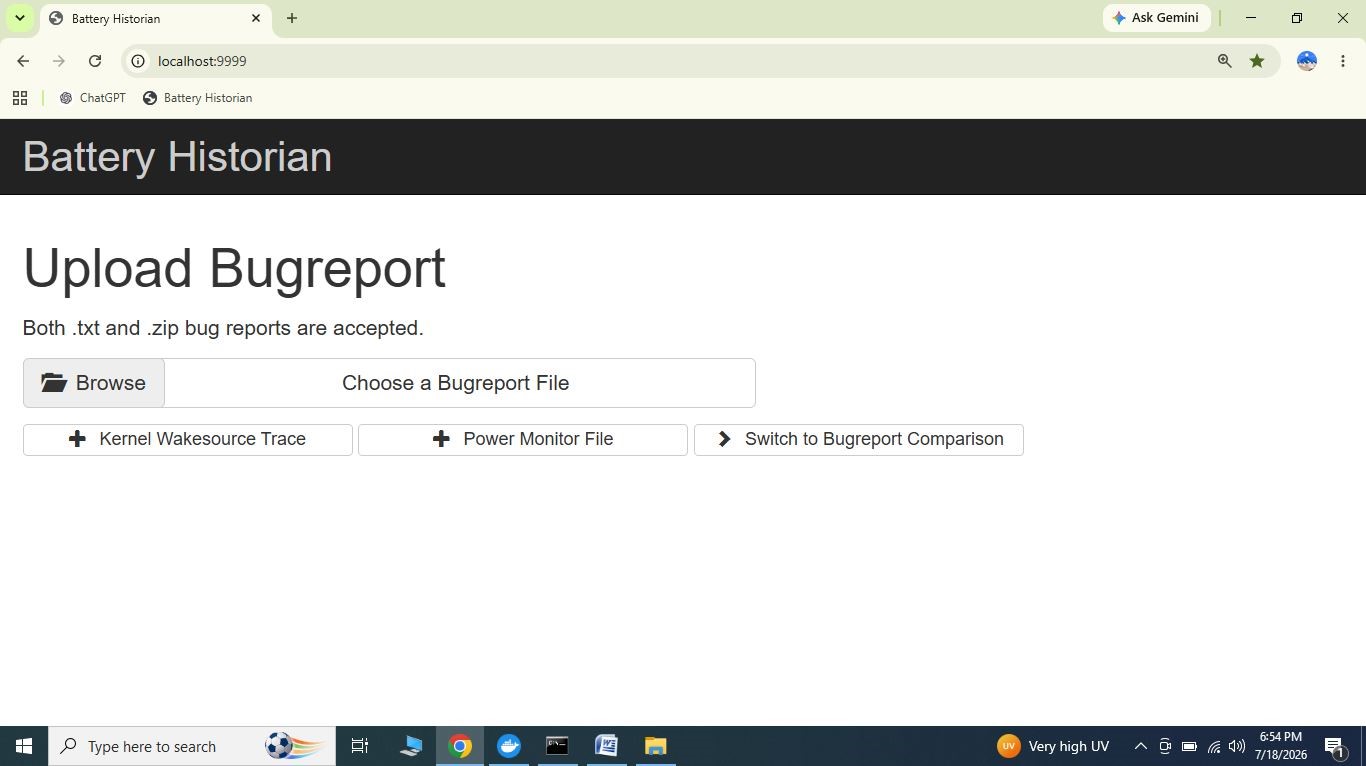
The proliferation of mobile applications mirrored the advancement of the digital world. However, battery life proved to be a major interruption to using these applications for long period of time without need of charging. Users impacted by the battery life limitation, faced performance issues and diminished sustainability of their devices. Advances in hardware and battery technology certainly have improved energy storage capabilities with the passage of time. However, a major cause of smartphone battery drain remains software inefficiencies, which persist today despite advances in hardware. Thus, to mitigate this problem, this study was carried out which investigates the potential benefits of smart coding techniques, including algorithm optimization, asynchronous programming, correct use of data structures and network throttling for enhancing android application battery performance without affecting application functionality. An experimental approach was used in the research to evaluate conventional coding against smart coding techniques. Open-source applications were selected from GitHub and cloned in Android Studio for android application development and editing. Selected five application projects from different category were OpenTasks (Productivity), AmazeFileManager (Utility), AntennaPod (Media Streaming), ThunderBird K-9 Mail (Communication), Fossify Gallery (Media Viewer). Consumption was measured before and after making code modification/optimizationand Battery Discharge Rate (BDR) analysis was performed by making use of Battery Historian. However, application responsiveness was also observed qualitatively and no lack was found. It was also carried out in debug mode on a physical device with a fixed real-world simulated scenario to measure each application’s power consumption. According to the research results, specific software optimizations improved energy performance by 12.28–32.99%, with an overall average reduction of 23.40%. The average BDR decreased from 15.82 %/hr before optimization to 12.1210 %/hr after optimization, representing a mean reduction of 3.7035 %/hr. The individual improvements per application were 32.99% for Amaze File Manager, 22.05% for AntennaPod, 17.40% for Fossify Gallery, 12.28% for K-9 Mail, and 32.13% for OpenTasks, which means that coding improvements can significantly substitute for hardware solutions to improve sustainability. Statistical validation using paired-samples t-tests showed statistically significant reductions for Amaze File Manager (t(3)=3.723, p=0.0337), AntennaPod (t(3)=4.108, p=0.0261), Fossify Gallery (t(3)=3.336, p=0.0445), and OpenTasks (t(3)=13.008, p=0.0010), while K-9 Mail showed a reduction that was not statistically significant at the 0.05 level (t(3)=3.098, p=0.0534). Across the 20 paired observations, the overall difference was statistically significant (t(19) = 7.618, p < 0.001; 95% CI: 2.69–4.72 %/hr), which means that coding improvements can significantly substitute for hardware solutions to improve sustainability. . This study fills the gap in existing literature as it moves away from theoretical abstractions and profiling techniques for developers and instead focuses on developer-oriented energy optimization techniques at development time. The results showed the need for energy awareness in the process through IDE tools and CI/CD energy tracking and developer training for energy-efficient programming during the development phase. This developer centric approach supports green software engineering by promoting Energy Efficiency (EE) as a fundamental design principle in the modern development of mobile applications.
References
“An analysis of power consumption in a smartphone | Proceedings of the 2010 USENIX conference on USENIX annual technical conference.” Accessed: Aug. 14, 2026. [Online]. Available: https://dl.acm.org/doi/10.5555/1855840.1855861
S. Mittal, “A survey of techniques for improving energy efficiency in embedded computing systems,” Int. J. Comput. Aided Eng. Technol., vol. 6, no. 4, pp. 440–459, Oct. 2014, doi: 10.1504/IJCAET.2014.065419.
A. Gupta, B. Suri, D. Sharma, S. Misra, and L. Fernandez-Sanz, “Code smells analysis for android applications and a solution for less battery consumption,” Sci. Reports 2024 141, vol. 14, no. 1, pp. 17683-, Jul. 2024, doi: 10.1038/s41598-024-67660-z.
S. Huber, T. Lorey, and M. Felderer, “Techniques for Improving the Energy Efficiency of Mobile Apps: A Taxonomy and Systematic Literature Review,” Proc. - 2023 49th Euromicro Conf. Softw. Eng. Adv. Appl. SEAA 2023, pp. 286–292, 2023, doi: 10.1109/SEAA60479.2023.00051.
A. Schuler and G. Kotsis, “A systematic review on techniques and approaches to estimate mobile software energy consumption,” Sustain. Comput. Informatics Syst., vol. 41, p. 100919, Jan. 2024, doi: 10.1016/J.SUSCOM.2023.100919.
R. Rua and J. Saraiva, “A large-scale empirical study on mobile performance: energy, run-time and memory,” Empir. Softw. Eng. 2023 291, vol. 29, no. 1, pp. 31-, Dec. 2023, doi: 10.1007/S10664-023-10391-Y.
M. Fawad, G. Rasool, and F. Palma, “Android Source Code Smells: A Systematic Literature Review,” Softw. - Pract. Exp., vol. 55, no. 5, pp. 847–882, May 2025, doi: 10.1002/SPE.3401;JOURNAL:JOURNAL:1097024X;WGROUP:STRING:PUBLICATION.
W. Wysocki, “Why Don’t Software Companies Care About Software Energy Efficiency? A Survey of Software Industry Developers.,” Procedia Comput. Sci., vol. 246, no. C, pp. 5054–5063, Jan. 2024, doi: 10.1016/J.PROCS.2024.09.589.
A. Poth and P. Momen, “Sustainable software engineering—A contribution puzzle of different teams in large IT organizations,” J. Softw. Evol. Process, vol. 36, no. 9, Sep. 2024, doi: 10.1002/SMR.2677;SERIALTOPIC:TOPIC:ACM-PUBTYPE.
S. U. Lee, N. Fernando, K. Lee, and J. G. Schneider, “A survey of energy concerns for software engineering,” J. Syst. Softw., vol. 210, p. 111944, Apr. 2024, doi: 10.1016/J.JSS.2023.111944.
J. M. Aragón-Jurado, J. C. de la Torre, P. Ruiz, and B. Dorronsoro, “Automatic software tailoring for Green Internet of Things,” Internet of Things, vol. 30, p. 101521, Mar. 2025, doi: 10.1016/J.IOT.2025.101521.
A. Pathak, Y. C. Hu, M. Zhang, P. Bahl, and Y. M. Wang, “Fine-grained power modeling for smartphones using system call tracing,” EuroSys’11 - Proc. EuroSys 2011 Conf., pp. 153–167, Apr. 2011, doi: 10.1145/1966445.1966460;SUBPAGE:STRING:BASIC.
X. Li and J. P. Gallagher, “A source-level energy optimization framework for mobile applications,” Proc. - 2016 IEEE 16th Int. Work. Conf. Source Code Anal. Manip. SCAM 2016, pp. 31–40, Dec. 2016, doi: 10.1109/SCAM.2016.12.
X. Gao, D. Liu, D. Liu, H. Wang, and A. Stavrou, “E-Android: A New Energy Profiling Tool for Smartphones,” Proc. - Int. Conf. Distrib. Comput. Syst., pp. 492–502, Jul. 2017, doi: 10.1109/ICDCS.2017.218.
L. Cruz and R. Abreu, “Using Automatic Refactoring to Improve Energy Efficiency of Android Apps,” Av. en Ing. Softw. a Niv. Iberoam. CIbSE 2018, pp. 163–176, Mar. 2018, Accessed: Aug. 14, 2026. [Online]. Available: https://arxiv.org/pdf/1803.05889
W. Wysocki, I. Miciuła, and P. Plecka, “Methods of Improving Software Energy Efficiency: A Systematic Literature Review and the Current State of Applied Methods in Practice,” Electron. 2025, Vol. 14, Page 1331, vol. 14, no. 7, p. 1331, Mar. 2025, doi: 10.3390/ELECTRONICS14071331.
C. König, D. J. Lang, and I. Schaefer, “Sustainable Software Engineering: Concepts, Challenges, and Vision,” ACM Trans. Softw. Eng. Methodol., vol. 34, no. 5, May 2025, doi: 10.1145/3709352.
S. Huber, L. Demetz, and M. Felderer, “A comparative study on the energy consumption of Progressive Web Apps,” Inf. Syst., vol. 108, p. 102017, Sep. 2022, doi: 10.1016/J.IS.2022.102017.
J. S. Moreira, E. L. G. Alves, and W. L. Andrade, “A Systematic Mapping on Energy Efficiency Testing in Android Applications,” ACM Int. Conf. Proceeding Ser., Dec. 2020, doi: 10.1145/3439961.3439964.
M. Muthu, K. Banuroopa, and S. Arunadevi, “Green and Sustainability in Software Development Lifecycle Process,” Sustain. Assess. 21st century, Feb. 2020, doi: 10.5772/INTECHOPEN.88030.
“Environmentally Sustainable Software Design and Development: A Systematic Literature Review.” Accessed: Aug. 14, 2026. [Online]. Available: https://arxiv.org/html/2407.19901v1
M. O. Adisa, S. Oyedeji, and J. Porras, “The nexus between ICT, top-down and bottom-up approaches for sustainability activities: A systematic mapping study,” J. Clean. Prod., vol. 449, p. 141768, Apr. 2024, doi: 10.1016/J.JCLEPRO.2024.141768.
C. Groza, A. Dumitru-Cristian, M. Marcu, and R. Bogdan, “A Developer-Oriented Framework for Assessing Power Consumption in Mobile Applications: Android Energy Smells Case Study,” Sensors 2024, Vol. 24, Page 6469, vol. 24, no. 19, p. 6469, Oct. 2024, doi: 10.3390/S24196469.
Olivia Poy, M. Moraga, “Impact on energy consumption of design patterns, code smells and refactoring techniques: A systematic mapping study,” vol. 222, p. 112303, 2025, doi: https://doi.org/10.1016/j.jss.2024.112303.
Olivier Le Goaër, Julien Hertout, “ecoCode: a SonarQube Plugin to Remove Energy Smells from Android Projects,” ACM Int. Conf. Proceeding Ser., vol. 9, 2022, [Online]. Available: https://dl.acm.org/doi/10.1145/3551349.3559518
E. Blokland, L. Cruz, and A. van Deursen, “EDATA: Energy Debugging And Testing for Android,” Proc. - 2025 IEEE/ACM 12th Int. Conf. Mob. Softw. Eng. Syst. MOBILESoft 2025, pp. 94–104, 2025, doi: 10.1109/MOBILESOFT66462.2025.00017.
Z. Chen, T. Wang, K. Zhang, Y. Guo, and Z. Shao, “A Q-Learning-Based Display Energy Optimization Scheme for Android Systems,” IEEE Trans. Comput. Des. Integr. Circuits Syst., vol. 44, no. 4, pp. 1262–1275, 2025, doi: 10.1109/TCAD.2024.3486244.
S. Park, J. Kim, J. Lee, and H. Cha, “Ember: Task Wakeup Sequence–Based Energy Optimization for Mobile Web Browsing,” ACM Trans. Embed. Comput. Syst., vol. 24, no. 5s, Sep. 2025, doi: 10.1145/3757918;
X. Dou, L. Liu, and L. Xiao, “An Intelligent Scheduling Approach on Mobile OS for Optimizing UI Smoothness and Power,” ACM Trans. Archit. Code Optim., vol. 22, no. 1, Mar. 2025, doi: 10.1145/3674910;PAGE:STRING:ARTICLE/CHAPTER.
A. Imran, T. Kosar, J. Zola, and M. F. Bulut, “Towards Sustainable Cloud Software Systems through Energy-Aware Code Smell Refactoring,” IEEE Int. Conf. Cloud Comput. CLOUD, pp. 223–234, 2024, doi: 10.1109/CLOUD62652.2024.00034
Downloads
Published
How to Cite
Issue
Section
License
Copyright (c) 2026 50sea

This work is licensed under a Creative Commons Attribution 4.0 International License.