Occupational and Public Health Risks among Urban Sanitation Workers in Lahore, Pakistan
DOI:
https://doi.org/10.33411/IJIST/1684Keywords:
Sanitation workers, Occupational Health Risks, Ergonomics Challenges, Social Stigma, Safety Measures, Public Health, Workplace SafetyAbstract
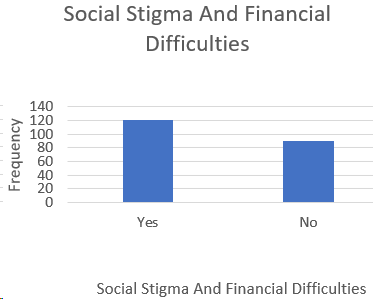
Urban sanitation workers face disproportionate occupational hazards, yet empirical evidence from Pakistan remains limited. This study aimed to quantify occupational health risks, ergonomic and working-condition challenges, safety measures, and social vulnerabilities among sanitation workers in Lahore. A quantitative cross-sectional survey was conducted among workers employed by the Lahore Waste Management Company and the Cantonment Board using simple random sampling. Data were collected through a structured questionnaire and analyzed in SPSS using descriptive statistics, Pearson correlation, Cronbach’s alpha, and multiple linear regression. Overall, 81.5% of respondents reported poor working conditions and ergonomic strain, 84.8% reported occupational health risks, 84.4% indicated inadequate organizational safety measures, and 57.3% experienced social stigma or financial difficulties. Regression analysis identified occupational health risks (β=0.564, p<0.001) and working conditions (β=0.401, p<0.001) as the strongest predictors of overall occupational vulnerability, followed by social stigma/financial issues (β=0.219, p<0.001) and safety measures (β=0.137, p=0.001). Sanitation workers in Lahore experience substantial occupational and social vulnerabilities. Strengthening enforceable occupational health and safety policies, provision of personal protective equipment, structured training, and routine health surveillance are urgently needed.
References
A. International, “‘Cut us open and see that we bleed like them’: Discrimination and stigmatization of sanitation workers in Pakistan [ASA 33/0120/2025],” https://www.amnesty.org/en/wp-content/uploads/2025/07/ASA3301202025english.pdf, Jul. 2025.
Avina Mendonca, Premilla D’Cruz, “Identity work at the intersection of dirty work, caste, and precarity: How Indian cleaners negotiate stigma,” Organization, vol. 3, no. 1, 2024, [Online]. Available: https://journals.sagepub.com/doi/full/10.1177/
L. Norton and L. Norton, “Let’s Talk Dirty: Revealing the United States Sanitation Crisis and Its Disproportionate Effect on Poor and Minority Communities,” Villanova Environ. Law J. (1991 - ), vol. 34, no. 1, p. 85, Feb. 2023, Accessed: Feb. 04, 2026. [Online]. Available: https://digitalcommons.law.villanova.edu/elj/vol34/iss1/4
Hamid Mahmood Malhi, Iftikhar Ahmed, “Monitoring of Ambient Air Pollution in Lahore City,” Pakistan J. Emerg. Sci. Technol., vol. 4, no. 3, pp. 65–73, 2023, [Online]. Available: https://www.researchgate.net/publication/372047292_Monitoring_of_
Ambient_Air_Pollution_in_Lahore_City
Shah, S. I. H., Nawaz, R., Ahmad, S., & Arshad, M., “Sustainability assessment of modern urban transport and its role in the reduction of greenhouse gas emissions: A case study of Metro Bus System (MBS), Lahore,” Kuwait J. Sci., vol. 47, no. 2, 2020, [Online]. Available: https://journalskuwait.org/kjs/index.php/KJS/article/view
/5407
N. M. Syed Ishtiaq Ahmed Fatmi, “Health Related Quality of Life amongst Sewerage and Sanitary Workers of Karachi, Pakistan,” Pakistan J. Med. Sci., vol. 38, no. 7, pp. 1986–1991, 2022, [Online]. Available: https://pubmed.ncbi.nlm.nih.gov/36246698/
Nadia Nisar, Nur Zakiah Mohd Saat, “Exploring Safety Outcomes Among Sanitary Workers in Punjab, Pakistan,” Cureus, vol. 17, no. 3, 2025, [Online]. Available: https://pmc.ncbi.nlm.nih.gov/articles/PMC12034294/
Khadija Aftab, Fouzia Sadaf,Abida Sharif, Ayesha Aqeel Ahmed, “Reclaiming public spaces: experiences of social exclusion of female sanitary workers in public spaces in Lahore, Pakistan,” Gend. Dev., vol. 32, no. 1–2, pp. 311–332, 2024, [Online]. Available: https://www.tandfonline.com/doi/full/10.1080/13552074.2024.2348399
Nadia Nisar, Nur Zakiah Mohd Saat, “Exploring Safety Outcomes Among Sanitary Workers in Punjab, Pakistan,” Cureus, vol. 17, no. 3, p. e81357, 2025, [Online]. Available: https://pubmed.ncbi.nlm.nih.gov/40291234/
“Improving social protection for sanitation workers in Pakistan.” Accessed: Feb. 04, 2026. [Online]. Available: https://www.susana.org/knowledge-hub/resources?id=5263
R. H. Raghavendra and R. A. Kumar, “Sanitation Workers: A Neglected Community of Indian Civilized Society,” Contemp. Voice Dalit, vol. 18, no. 1, pp. 87–98, Jan. 2026, doi: 10.1177/2455328x211069683.
S. I. H. Shah, “Analysis Of Land Use Change And Population Growth Using Goe- Spatial Techniques In Lahore-Pakistan,” Pak. J. Sci., vol. 73, no. 2, 2022, doi: 10.57041/pjs.v73i2.659.
N. Vonkat, U. A. Umar, M. H. Ibrahim, and A. N. Oyedeji, “Ergonomics and health risk awareness of workers involved in manual material handling at Sabon Gari Market in Zaria, Nigeria,” Int. J. Occup. Saf. Ergon., vol. 30, no. 4, pp. 1217–1225, Oct. 2024, doi: 10.1080/10803548.2024.2383060.
Muhammad Meesum Hassan, Naveed Farah, “A Study on Occupational Health Hazards of Sanitation Workers in District Multan, Pakistan,” Int. J. Curr. Res. Rev., vol. 13, no. 13, pp. 222–232, 2021, [Online]. Available: https://www.researchgate.net/publication/354708175_A_Study_on_Occupational_Health_Hazards_of_Sanitation_Workers_in_District_Multan_Pakistan
Sukainah S. Alhazim, Sultan T. Al-Otaibi, “Knowledge, Attitudes, and Practices Regarding Ergonomic Hazards Among Healthcare Workers in a Saudi Government Hospital,” J. Multidiscip. Healthc., vol. 15, pp. 1771–1778, 2022, [Online]. Available: https://pubmed.ncbi.nlm.nih.gov/36042943/
F. Bakar Attiq, A., Nawaz, R., Atif Irshad, M., Nasim, I., Nasim, M., Latif, M., Hussain Shah, S.I. and A., “Urban Air Quality Nexus: PM2.5 Bound-Heavy Metals and their Alarming Implication for Incremental Lifetime Cancer Risk,” Pollution, vol. 10, no. 1, pp. 580–594, 2024, [Online]. Available: https://jpoll.ut.ac.ir/article_95600_d5e4df1448a196f5ae1d9ae13f75e9d0.pdf
J. Slesinger, “Occupational Diseases,” Ann. Ist. Super. Sanita, 1978, [Online]. Available: https://discovery.researcher.life/article/occupational-diseases/e63859de3346308da677547de8cbb256
S. A. Yasin and Z. R. Salih, “Occupational Health Risk Assessment of Heavy Metal Exposure `Among Gas Station Workers in Erbil City,” J. Appl. Toxicol., vol. 45, no. 10, pp. 2095–2107, Oct. 2025, doi: 10.1002/jat.4827.
M. Ittefaq, W. Ejaz, S. Jamil, A. Iqbal, and R. Arif, “Discriminated in Society and Marginalized in Media: Social Representation of Christian Sanitary Workers in Pakistan,” Journal. Pract., vol. 17, no. 1, pp. 66–84, Jan. 2023, doi: 10.1080/17512786.2021.1939103.
Sina Temesgen Tolera, Shibiru Temesgen, “Global systematic review of occupational health and safety outcomes among sanitation and hygiene workers,” Front. Public Heal., 2023, [Online]. Available: https://pubmed.ncbi.nlm.nih.gov/38174086/
R. Tiwari, “Occupational health hazards in sewage and sanitary workers,” Indian J. Occup. Environ. Med., vol. 12, no. 3, p. 112, Sep. 2008, doi: 10.4103/0019-5278.44691.
Syed Imran Hussain Shah, Tahir Hussain Seehar, “Biocrude from hydrothermal liquefaction of indigenous municipal solid waste for green energy generation and contribution towards circular economy: A case study of urban Pakistan,” Heliyon, vol. 10, no. 17, p. e36758, 2024, [Online]. Available: https://www.sciencedirect.com/
science/article/pii/S2405844024127892
D. Akyen, E. Agyemang, and J. B. Forkuor, “Determinants of Occupational Health and Safety Practices of Informal Waste Pickers,” Int. J. Occup. Saf. Ergon., vol. 31, no. 2, pp. 486–493, Apr. 2025, doi: 10.1080/10803548.2025.2452753.
“Global Research Agenda for Improving the Health Safety and Dignity of Sanitation Workers,” 2022, Accessed: Feb. 04, 2026. [Online]. Available: https://www.who.int/publications/i/item/9789240062900
Z. U. Hassan, M. Yaseen, S. I. H. Shah, A. Naveed, F. H. Malik, and S. I. Hussain, “Half a Century of Warming in Punjab, Pakistan: Statistical Evidence from 1970–2019,” Int. J. Innov. Sci. Technol., vol. 7, no. 4, pp. 2773–2786, 2025, Accessed: Feb. 04, 2026. [Online]. Available: https://ideas.repec.org/a/abq/ijist1/v7y2025i4p2773-2786.html
L. Sperandeo, “The heroes behind sanitation – An insight into faecal sludge management workers in Zambia.” Accessed: Feb. 04, 2026. [Online]. Available: https://www.susana.org/knowledge-hub/resources?id=3762
Sterenn Philippe, Andrés Hueso, “Challenges Facing Sanitation Workers in Africa: A Four-Country Study,” Water, vol. 14, no. 22, p. 3733, 2022, [Online]. Available: https://www.mdpi.com/2073-4441/14/22/3733
S. Kaur, S. Mullainathan, S. Oh, and F. Schilbach, “Do Financial Concerns Make Workers Less Productive?,” Q. J. Econ., vol. 140, no. 1, pp. 635–689, Jan. 2025, doi: 10.1093/qje/qjae038.
Maria Latif, Syed Imran Hussain Shah, “Assessing Climate Change Vulnerability and Identifying Adaptation Strategies for Sustainable Agriculture in Pakistan,” Int. J. Adv. Sustain. Dev., vol. 1, no. 1, pp. 42–50, 2024, [Online]. Available: https://journals.uol.edu.pk/IJASD/article/view/3036
G. Meena, T. Priyanka, A. Amora, “Work-Life Challenges Faced by Sanitary Workers-A Special Reference to Thoothukudi District,” Kristu Jayanti J. Manag. Sci., vol. 2, no. 12, 2022, [Online]. Available: https://www.kristujayantijournal.com/index.php/ijcm/article/view/2278
Hemali Harish Oza, Madison Gabriella Lee, “Occupational health outcomes among sanitation workers: A systematic review and meta-analysis,” Int. J. Hyg. Environ. Health, vol. 40, p. 113907, 20222, [Online]. Available: https://www.sciencedirect.com/science/article/pii/S1438463921002224
Umme Kulsoom Khattak, Fouzia Sadiq, “Occupational health hazards, health conditions and safety measures among sanitation workers in Khyber Pakhtunkhwa, Pakistan,” KHYBER Med. Univ. J., vol. 17, no. 3, 2025, [Online]. Available: https://www.kmuj.kmu.edu.pk/article/view/23988
Downloads
Published
How to Cite
Issue
Section
License
Copyright (c) 2026 50sea

This work is licensed under a Creative Commons Attribution 4.0 International License.