Prediction of Molecular and Physical Properties of Non-small Cell Lung Cancer (NSCLC) Drugs using Mathematical Modelling and M-Polynomial Indices
Keywords:
M Polynomial Indices, Statistical Analysis, NSCLC, QSPR, Physical PropertiesAbstract
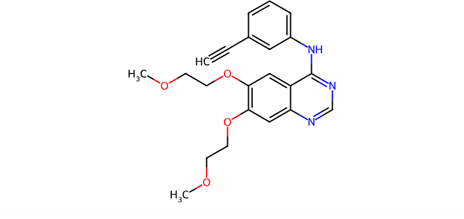
The computation of M-Polynomial indices for Erlotinib, a tyrosine kinase receptor inhibitor and most widely recognized anti-cancer drug for the treatment of patients with NSCLC and advance pancreatic cancer is the main focus of this study. In order to efficiently calculate these M-polynomial indices, we used a graph-based method which renders use of the edge partitioning technique based on adjacent matrices and vertex degrees. Using Python software, we applied numerous regression models, such as numerous Linear Regression (LR), Elastic Net Regression (ENR), Lasso Regression (LR), Ridge Regression (RR) and Support Vector Regression (SVR), to develop Quantitative Structure-Property Relationships (QSPR). Based on the M polynomial indices, these models were utilized to forecast the physical properties such as melting point, enthalpy of vaporization, molar refractivity, molar volume, and polarizability, molecular weight, molecular mass, surface area, chemical hardness of NSCLC medications. According to our research, the M-polynomial indices predict these physical attributes with remarkable accuracy, providing crucial information on structural traits that maximize anticancer effectiveness. Additionally, we suggested predictive models for every physical attribute examined, proving the value of the M-polynomial index in comprehending molecular behaviour and directing the creation of innovative therapeutic medicines. This study not only facilitates the accurate prediction of physical properties for known NSCLC drugs but also holds the potential to fasten the novel drug discovery and development, uncharacterized anti-cancer compounds, thus contributing to the advancement of cancer therapeutics.
References
J. J. Sylvester, “On an Application of the New Atomic Theory to the Graphical Representation of the Invariants and Covariants of Binary Quantics, with Three Appendices,” Am. J. Math., vol. 1, no. 1, p. 64, 1878, doi: 10.2307/2369436.
A. A. Abdelgalil, H. M. Al-Kahtani, and F. I. Al-Jenoobi, “Erlotinib,” Profiles Drug Subst. Excipients Relat. Methodol., vol. 45, pp. 93–117, Jan. 2020, doi: 10.1016/BS.PODRM.2019.10.004.
M. A. Bareschino, C. Schettino, T. Troiani, E. Martinelli, F. Morgillo, and F. Ciardiello, “Erlotinib in cancer treatment,” New Trends Clin. Oncol. - 9th Natl. GOIM Congr. 17-19 June 2007, Potenza, Italy, vol. 18, pp. vi35–vi41, 2007, doi: 10.1093/annonc/mdm222.
U. Smrdel and V. Kovač, “Erlotinib in previously treated non-small-cell lung cancer,” Radiol. Oncol., vol. 40, no. 1, Jul. 2006, doi: 10.1056/NEJMOA050753;PAGEGROUP:STRING:PUBLICATION.
“On history of the Randić index and emerging hostility toward chemical graph theory | Request PDF.” Accessed: Dec. 09, 2025. [Online]. Available: https://www.researchgate.net/publication/267081398_On_history_of_the_Randic_index_and_emerging_hostility_toward_chemical_graph_theory
E. Mohyedinbonab, M. Jamshidi, and Y. F. Jin, “A Review on Applications of Graph Theory in Network Analysis of Biological Processes,” Int. J. Intell. Comput. Med. Sci. Image Process., vol. 6, no. 1, pp. 27–43, 2014, doi: 10.1080/1931308X.2014.938492;WGROUP:STRING:PUBLICATION.
H. Hosoya, “Topological Index. A Newly Proposed Quantity Characterizing the Topological Nature of Structural Isomers of Saturated Hydrocarbons,” Bull. Chem. Soc. Jpn., vol. 44, no. 9, pp. 2332–2339, Sep. 1971, doi: 10.1246/BCSJ.44.2332.
A. Graovac, I. Gutman, and N. Trinajstić, “Topological Approach to the Chemistry of Conjugated Molecules,” 1977, Accessed: Dec. 09, 2025. [Online]. Available: https://books.google.com/books/about/Topological_Approach_to_the_Chemistry_of.html?id=Hq7rCAAAQBAJ
H. Parastar and R. Tauler, “Big (Bio)Chemical Data Mining Using Chemometric Methods: A Need for Chemists,” Angew. Chemie, vol. 134, no. 44, p. e201801134, Nov. 2022, doi: 10.1002/ANGE.201801134.
S. Sorgun and K. Birgin, “Vertex-Edge-Weighted Molecular Graphs: A Study on Topological Indices and Their Relevance to Physicochemical Properties of Drugs Used in Cancer Treatment,” J. Chem. Inf. Model., vol. 65, no. 4, pp. 2093–2106, Feb. 2025, doi: 10.1021/ACS.JCIM.4C02013.
H. Saeidi, H. Hassani, M. S. Dahaghin, and S. Mehrabi, “An optimal solution of lung cancer mathematical model using generalized Bessel polynomials,” Phys. Scr., vol. 99, no. 12, p. 125269, Nov. 2024, doi: 10.1088/1402-4896/AD9095.
Y. C. Kwun, M. Munir, W. Nazeer, S. Rafique, and S. M. Kang, “M-Polynomials and topological indices of V-Phenylenic Nanotubes and Nanotori,” Sci. Reports 2017 71, vol. 7, no. 1, pp. 8756-, Aug. 2017, doi: 10.1038/s41598-017-08309-y.
H. Wiener, “Structural Determination of Paraffin Boiling Points,” J. Am. Chem. Soc., vol. 69, no. 1, pp. 17–20, 2002, doi: 10.1021/JA01193A005.
D. Amić, D. Bešlo, B. Lučič, S. Nikolić, and N. Trinajstić, “The Vertex-Connectivity Index Revisited,” J. Chem. Inf. Comput. Sci., vol. 38, no. 5, pp. 819–822, 1998, doi: 10.1021/CI980039B.
M. Munir, W. Nazeer, S. Rafique, and S. M. Kang, “M-Polynomial and Degree-Based Topological Indices of Polyhex Nanotubes,” Symmetry 2016, Vol. 8, Page 149, vol. 8, no. 12, p. 149, Dec. 2016, doi: 10.3390/SYM8120149.
Downloads
Published
How to Cite
Issue
Section
License
Copyright (c) 2025 50sea

This work is licensed under a Creative Commons Attribution 4.0 International License.